By Willis Jarvis June 3, 2026
Choosing the right payment processor Pittsburgh businesses can depend on is more than a back-office decision. It affects how customers pay, how quickly money reaches your business bank account, how easily your staff handles transactions, and how confidently you can manage growth.
For a restaurant in the Strip District, the right setup may mean fast table-side payments, tip adjustments, and reliable weekend support. For a retail shop in Shadyside or Lawrenceville, it may mean inventory-connected POS systems, contactless payments, and clear reporting.
For a contractor, consultant, medical office, nonprofit, or ecommerce seller, it may mean secure invoice payments, recurring billing, ACH payments, and a payment gateway that works smoothly with existing software.
There is no single best processor for every business. The right choice depends on your business type, transaction volume, average ticket size, customer payment preferences, risk profile, sales channels, software needs, and service expectations.
A good provider should help you accept payments securely while keeping pricing, support, contract terms, and technology easy to evaluate.
This guide explains how Pittsburgh business owners and decision-makers can compare payment processing companies in Pittsburgh, understand fees, review service terms, and choose a payment setup that fits the way they actually operate.
Why Choosing the Right Payment Processor in Pittsburgh Matters
A payment processor sits at the center of your revenue flow. When it works well, customers move through checkout smoothly, deposits arrive predictably, and your staff can focus on running the business.
When it does not, the problems can show up quickly through declined cards, confusing statements, hidden costs, delayed funding, equipment issues, chargebacks, or support delays.
For Pittsburgh businesses, payment needs can vary widely by neighborhood, industry, and sales model. A bakery with heavy morning foot traffic needs a fast point-of-sale system and contactless payments. A local contractor may need mobile payments, invoice links, and ACH options for larger jobs.
A professional firm may need recurring billing and a virtual terminal. A nonprofit may need online donations, event payments, and clean reporting. An ecommerce brand may need a payment gateway Pittsburgh shoppers can use securely from any device.
The right Pittsburgh payment processor should support your current operations and leave room for change.
Many local businesses begin with simple credit card processing and later add online payments, mobile readers, ecommerce checkout, subscriptions, gift cards, or integrated POS reporting. Switching processors after growth can be disruptive, so it helps to think beyond today’s transaction volume.
Choosing carefully also protects margins. Credit card processing Pittsburgh businesses use can include interchange fees, assessment fees, processor markup, monthly fees, gateway fees, PCI fees, chargeback fees, and equipment costs. A quote that looks inexpensive at first may cost more once all fees are included.
Local context matters, too. Pittsburgh has restaurants, retailers, neighborhood service businesses, contractors, startups, professional offices, healthcare-adjacent businesses, seasonal vendors, event sellers, and ecommerce merchants. Each one has different payment risks and operational needs.
What a Payment Processor Does for Local Businesses
A payment processor moves transaction information between your business, the customer’s card issuer, the card networks, and the bank or account where your deposits land.
When a customer taps, inserts, swipes, enters card details online, pays an invoice, or authorizes a recurring payment, the processor helps route the payment for authorization, settlement, and funding.
In practical terms, a merchant services provider may give your business access to a merchant account, card terminals, POS systems, a payment gateway, virtual terminal, mobile readers, ACH processing, recurring billing, fraud tools, reporting dashboards, and support.
Some businesses need only a simple card reader. Others need a full omnichannel payments setup that connects in-person payments, online payments, invoice payments, and customer records.
A merchant account Pittsburgh business owners use is often where approved card transactions are settled before funds are deposited into the business bank account.
Some providers use traditional merchant accounts, while others use aggregated payment models. Both can work, but the underwriting process, funding rules, account stability, risk controls, and support experience may differ.
For local merchants, the processor also affects how card-present transactions and card-not-present transactions are handled. Card-present transactions happen when a customer physically pays at a terminal using a chip card, tap-to-pay card, or mobile wallet.
Card-not-present transactions happen online, over the phone, through invoices, or through keyed entries. Card-not-present payments usually carry more fraud risk and may cost more.
A good payment processor should also help you manage refunds, voids, batches, chargebacks, PCI compliance, user permissions, and transaction reporting.
If you operate across multiple locations or sales channels, reporting becomes especially important because you need to understand where sales are coming from and how fees are being applied.
For more background on what local merchant services can include, this guide to Pittsburgh merchant services and payment processing provides a helpful overview of common tools such as merchant accounts, gateways, and POS systems.
Key Features to Look for in a Pittsburgh Payment Processor
The best processor for your business should match how you sell, how customers prefer to pay, and how your team manages operations.
For many Pittsburgh merchants, the most important features include transparent pricing, reliable hardware, secure payment acceptance, flexible online options, strong reporting, responsive support, and contract terms that are easy to understand.
Start by listing your payment channels. Do customers pay in person, online, by phone, by invoice, at events, through recurring billing, or across several channels? A restaurant may prioritize fast POS workflows, tip management, split checks, and handheld terminals.
A retailer may care more about barcode scanning, inventory, returns, loyalty, and gift cards. A contractor may need mobile invoicing, deposits, progress payments, and ACH payments. A nonprofit may need donation forms, event registration payments, and recurring contributions.
Next, look at payment methods. Most businesses should be able to accept credit cards, debit card payments, EMV chip cards, contactless payments, mobile wallet payments, and online payments when relevant.
Depending on your industry, ACH payments may also be useful because they can be cost-effective for large invoices, tuition, membership dues, rent-like payments, or recurring billing.
Technology compatibility is also important. Your payment processor should work with your point-of-sale system, ecommerce platform, accounting software, scheduling tool, customer management system, or invoicing software. If it does not, you may end up doing manual reconciliation, duplicating data entry, or losing visibility into sales.
Support quality can be just as important as features. When a terminal stops working during a dinner rush or a batch does not settle before payroll, you need practical help. For some businesses, a local payment processor or provider with knowledgeable local support can make troubleshooting easier.
Payment Processor Evaluation Checklist for Pittsburgh Businesses
| Evaluation Area | Why It Matters | Questions to Ask | What to Watch For |
| Pricing structure | Fees affect profit on every transaction | Is pricing interchange-plus, flat-rate, tiered, or subscription-based? | Vague rates, bundled categories, unexplained monthly fees |
| Business fit | Different industries need different tools | Do you support my business type and transaction mix? | Generic setups that do not match your workflow |
| Payment methods | Customers expect flexible options | Can I accept cards, ACH, contactless, mobile, online, and invoices? | Missing features that require another provider |
| POS compatibility | Software affects daily operations | Does this work with my POS, accounting, ecommerce, or booking tools? | Closed systems or expensive integration limits |
| Security | Payment data must be protected | What fraud tools, encryption, tokenization, and PCI support are included? | Security treated as an add-on with unclear responsibilities |
| Funding speed | Cash flow depends on deposits | When will funds reach my bank account? | Funding delays, weekend limitations, reserve requirements |
| Chargeback support | Disputes can cost time and money | How are chargebacks communicated and managed? | Poor documentation tools or slow notifications |
| Contract terms | Long agreements can limit flexibility | Is there a long-term contract, early termination fee, or equipment lease? | Non-cancelable leases or auto-renewal clauses |
| Customer support | Problems can interrupt revenue | Is support available when my business is open? | Support limited to email or slow ticket queues |
| Growth options | Your needs may change | Can I add locations, ecommerce, subscriptions, or mobile users later? | Systems that require a full replacement to scale |
Understanding Payment Processing Fees and Pricing Models

Payment processing fees can be confusing because several parties may be involved in every transaction. A typical card payment may include interchange fees, assessment fees, and processor markup.
Depending on the provider and setup, you may also see monthly fees, gateway fees, PCI compliance fees, statement fees, batch fees, chargeback fees, refund fees, equipment costs, software fees, or minimum processing fees.
Interchange fees are generally set by card networks and vary by card type, transaction type, industry category, and risk level. Assessment fees are also network-related. Processor markup is the part you can most directly compare between providers. That markup may appear as a percentage, a per-transaction fee, a monthly subscription, or a bundled rate.
The best pricing model depends on your business. A low-volume startup may prefer predictable pricing even if the per-transaction cost is higher.
A growing retailer or restaurant may benefit from more detailed pricing because small differences can add up over thousands of transactions. A service business with large average tickets may care deeply about percentage-based costs and ACH alternatives.
When comparing payment processing companies in Pittsburgh, do not compare only the headline rate. Ask for a full cost estimate based on your actual transaction mix.
Share your average monthly volume, average ticket size, card-present versus card-not-present percentage, keyed transaction volume, online sales volume, refund patterns, and seasonal spikes. A meaningful quote should reflect how your business actually processes payments.
It is also helpful to review a recent merchant statement if you are already processing. Look for effective rate, total fees, transaction counts, chargeback fees, monthly charges, PCI fees, gateway costs, and equipment charges. Your effective rate is your total processing cost divided by total card sales for the period.
For additional context on pricing terminology, this interchange-plus pricing overview explains how interchange, markup, and pricing structures are commonly discussed in merchant services.
Credit Card Processing Fees
Credit card processing fees usually differ from debit card payments, ACH payments, and other payment methods. Rewards cards, business cards, manually keyed cards, online transactions, and international cards may cost more than basic card-present debit transactions. That is why a single advertised rate rarely tells the full story.
For Pittsburgh restaurants, retailers, and service providers, transaction environment matters. A chip or contactless transaction at a terminal is generally lower risk than a keyed transaction taken over the phone. Ecommerce checkout and invoice payments are convenient, but they are card-not-present transactions and need stronger fraud controls.
Ask whether refunds return processing fees, whether authorization fees apply to declined transactions, and whether there are extra costs for address verification, tokenization, recurring billing, or gateway use. Also ask how chargeback fees are handled and whether there are fees for retrieval requests or dispute responses.
The goal is not always to find the lowest possible rate. The goal is to find pricing that is transparent, predictable, and appropriate for your risk and transaction mix.
Interchange-Plus Pricing
Interchange-plus pricing separates the underlying interchange and assessment costs from the processor markup. Many businesses like this model because it can make statements easier to review and helps show what the processor is charging above network-related costs.
This model can work well for established businesses with meaningful processing volume, mixed card types, or owners who want more visibility. A retailer with steady monthly card sales or a restaurant with high transaction counts may benefit from seeing itemized costs instead of bundled categories.
However, interchange-plus pricing still requires careful review. You should ask about the markup percentage, per-transaction markup, monthly fees, gateway fees, PCI fees, batch fees, and any minimums. Transparent does not automatically mean inexpensive. It simply means the components should be easier to identify.
Flat-Rate Pricing
Flat-rate pricing charges a simple percentage and sometimes a per-transaction fee. It is often easier to understand because you know the same basic rate applies to many transactions. This can be appealing for new businesses, seasonal vendors, pop-ups, small nonprofits, or startups that want quick setup and predictable costs.
The tradeoff is that flat-rate pricing may cost more as volume grows. A business with high monthly sales, large tickets, or many debit transactions may pay more than necessary because the flat rate bundles many cost types together.
Flat-rate pricing can still be practical when simplicity matters more than optimization. A weekend event seller, small artist studio, or low-volume service provider may prefer a straightforward setup. Just make sure you understand funding rules, account review policies, chargeback handling, and whether your business type is supported.
Tiered Pricing
Tiered pricing groups transactions into categories such as qualified, mid-qualified, and non-qualified. The challenge is that the categories may not clearly show what each transaction actually costs or why it falls into a certain tier.
Some businesses find tiered pricing difficult to evaluate because the lowest advertised rate may apply only to limited transaction types. Rewards cards, keyed transactions, online payments, corporate cards, or certain card-not-present transactions may fall into higher tiers.
If you receive a tiered quote, ask for examples. What rate applies to a customer tapping a rewards card? What about an online order? What about a keyed invoice payment? What about a business credit card? If the answers are unclear, comparing total cost becomes difficult.
Comparing Merchant Services for Different Business Types
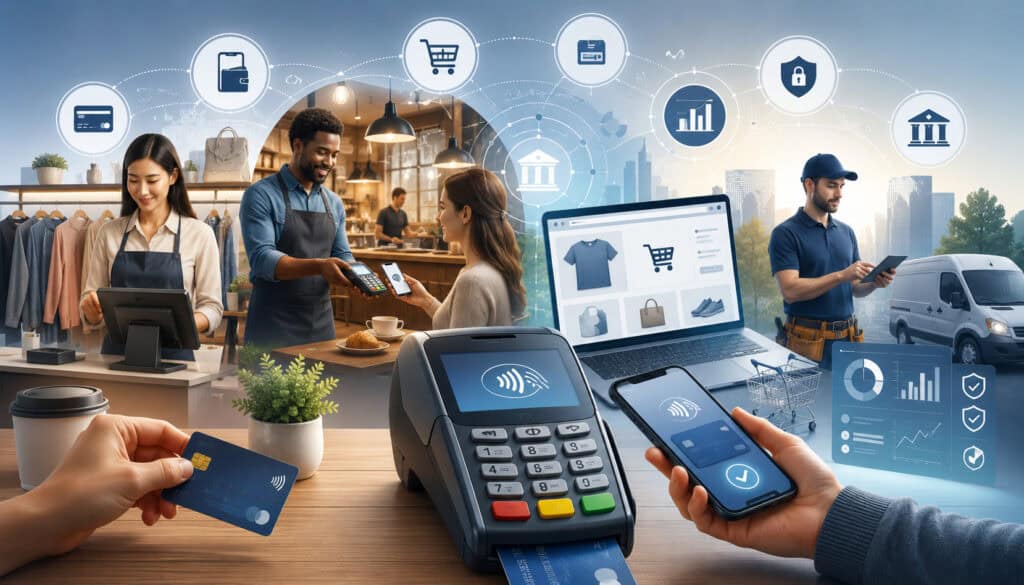
Different businesses need different merchant services Pittsburgh providers can support. A processor that works well for a coffee shop may not be ideal for an ecommerce brand.
A setup that fits a professional office may not be enough for a restaurant with tips, tabs, and table management. A contractor may need mobile estimates and invoice links, while a nonprofit may need recurring donations and event payments.
The right payment processor should understand your business model, not just your monthly processing volume. It should support your customer experience, accounting needs, compliance obligations, refund policies, staff workflows, and growth plans.
That is especially important in Pittsburgh, where many businesses combine neighborhood foot traffic, online sales, events, and service-based relationships.
When comparing options, describe your busiest day, not just your average day. A restaurant may process most transactions during evenings and weekends. A florist may spike around holidays and events.
A contractor may have fewer transactions but higher ticket sizes. A retailer may process returns, exchanges, gift cards, and inventory adjustments. A professional firm may send recurring invoices or accept retainers.
Also consider how customers expect to pay. Younger customers may prefer mobile wallets and ecommerce checkout. Commercial clients may prefer ACH or card-on-file billing. Event customers may expect quick mobile checkout. Longtime neighborhood customers may still want printed receipts and familiar checkout experiences.
For a Pittsburgh-focused overview of local payment setups, this resource on payment solutions for neighborhood businesses covers practical considerations for shops, service businesses, and local operators.
Retail Payment Processing
Retail payment processing Pittsburgh businesses use should make checkout fast, accurate, and connected to store operations. A boutique, specialty grocer, hardware shop, gift store, or neighborhood market may need barcode scanning, inventory tracking, customer profiles, returns, exchanges, gift cards, discounts, and sales tax reporting.
Retailers should look for POS systems Pittsburgh businesses can use without slowing down the line. The system should support EMV chip cards, contactless payments, mobile wallets, printed or digital receipts, and user permissions for employees. If you sell both in-store and online, inventory syncing becomes important because customers expect accurate availability.
Reporting matters in retail. You may want to see sales by product, category, employee, location, time of day, or promotion. If your payment processor and POS system do not integrate, you may spend extra time reconciling deposits, sales reports, and accounting records.
Retailers should also review hardware costs carefully. Terminals, cash drawers, scanners, receipt printers, tablets, and customer displays can add up. Avoid long equipment leases when purchasing or short-term rental options would be more flexible.
Restaurant Payment Processing Pittsburgh
Restaurant payment processing Pittsburgh operators need should support speed, accuracy, and hospitality. Restaurants, cafes, food trucks, bars, bakeries, and quick-service concepts often need tip prompts, tip adjustments, table management, split checks, tabs, online ordering, handheld devices, kitchen routing, and reliable weekend support.
A restaurant payment system should handle busy service periods without lag. If the POS freezes on a Friday night or a terminal cannot connect during brunch, the issue affects both revenue and guest experience. Ask about offline mode, device replacement, support hours, and network requirements.
Tip and payroll reporting are also important. Make sure your system can handle tips, gratuities, employee permissions, refunds, voids, and closeout reporting. If you offer online ordering, catering, delivery, or event deposits, ask whether those payments flow into the same reporting dashboard.
Restaurants should also pay attention to chargebacks and refund documentation. Itemized receipts, signed receipts when needed, clear descriptors, and consistent refund policies can help reduce confusion.
Ecommerce Payment Processing Pittsburgh
Ecommerce payment processing Pittsburgh sellers use should focus on security, conversion, fraud prevention, and integration. Whether you sell apparel, specialty foods, handmade goods, professional downloads, subscriptions, or local pickup items, your checkout must be easy for customers and manageable for your team.
A good payment gateway Pittsburgh ecommerce businesses use should support secure checkout, mobile-friendly design, address verification, CVV checks, tokenization, refunds, partial refunds, saved payment methods when appropriate, and reporting. If you use an ecommerce platform, make sure the gateway integrates cleanly and does not create duplicate order records.
Card-not-present transactions carry additional risk, so fraud prevention matters. Look for tools such as velocity controls, risk scoring, address verification, suspicious order review, and clear dispute documentation. For higher-ticket orders, customized fraud rules can help reduce losses without blocking legitimate customers.
Ecommerce sellers should also consider settlement timing, chargeback alerts, descriptor clarity, and customer service processes. Many chargebacks happen because customers do not recognize a billing descriptor or cannot get a quick response about shipping, refunds, or order status.
Service Business Payment Processing
Service providers often need different tools than retailers or restaurants. Contractors, consultants, repair companies, salons, wellness providers, legal offices, accounting firms, marketing agencies, and home service businesses may rely on invoices, deposits, retainers, recurring billing, and mobile payments.
A service business may benefit from a virtual terminal, payment links, ACH payments, card-on-file options, recurring billing, and automated reminders.
If technicians or staff collect payments in the field, mobile readers can help reduce unpaid invoices. For larger invoices, ACH may be a useful alternative because it can reduce card costs and support bank-to-bank payments.
Professional firms should pay special attention to user permissions, audit trails, client records, and accounting integration. Contractors should consider deposits, progress billing, change orders, and partial payments. Appointment-based businesses should look at cancellation fees, stored payment methods, and recurring memberships.
Payment Security, PCI Compliance, and Fraud Prevention
Payment security is not optional. Any business that accepts card payments must take cardholder data protection seriously, whether it operates a busy retail counter, online checkout, mobile setup, or virtual terminal. Security responsibilities vary depending on how payments are accepted, what systems are used, and whether card data touches your environment.
PCI compliance refers to the security standards businesses must follow when accepting payment cards. The PCI Security Standards Council provides standards and resources that help merchants protect cardholder data. Many small merchants validate compliance through a self-assessment process, but your exact responsibilities depend on your payment setup.
Your processor should help you understand PCI requirements, but it should not leave you guessing. Ask whether the provider offers PCI guidance, secure hosted payment pages, tokenization, encryption, vulnerability scanning support where needed, and help completing the right self-assessment questionnaire.
If you use ecommerce checkout, ask whether payment pages are hosted securely and whether card data is stored by a validated provider.
Fraud prevention is especially important for card-not-present transactions. Online orders, keyed payments, invoices, and recurring billing can be more vulnerable than in-person chip transactions. Tools such as address verification, CVV checks, risk scoring, tokenization, velocity filters, and transaction monitoring can reduce exposure.
Security also includes staff practices. Limit user permissions, avoid sharing logins, train employees on refunds and suspicious transactions, and never store card numbers in spreadsheets, email, paper notes, or unsecured systems.
The FTC business guidance on credit card payments is a useful resource for understanding consumer protection and payment-related responsibilities.
PCI Compliance
PCI compliance is a shared responsibility among merchants, processors, gateways, software vendors, and other payment partners. Even if your provider handles much of the technical work, your business still needs to use systems properly and follow required procedures.
For a small retail store, PCI responsibilities may involve using approved terminals, maintaining secure networks, completing an annual questionnaire, and following basic security practices.
For an ecommerce business, responsibilities may involve secure checkout, vulnerability scanning, access controls, and careful integration management. For a business that keys cards into a virtual terminal, staff procedures and device security also matter.
Ask your merchant account provider Pittsburgh businesses are considering which PCI validation method applies to your setup. Also ask what happens if compliance is not completed. Some providers charge non-compliance fees, while others may restrict processing until issues are addressed.
Do not treat PCI as a one-time form. Update passwords, remove former employee access, patch software, secure Wi-Fi networks, and review users regularly.
Chargeback Prevention
Chargebacks happen when a customer disputes a transaction through their card issuer. Some disputes are valid. Others result from confusion, shipping issues, unclear billing descriptors, refund delays, duplicate billing, fraud, or customer misunderstanding. Regardless of cause, chargebacks can create fees, lost revenue, and administrative work.
Prevention starts with clarity. Use recognizable billing descriptors, itemized receipts, clear refund policies, accurate product descriptions, delivery tracking, signed agreements where appropriate, and responsive customer service.
For service businesses, written scopes of work and approval records can be valuable. For ecommerce sellers, order confirmations and shipping documentation matter.
Your processor should provide quick chargeback notifications and a clear process for submitting evidence. Ask how disputes are delivered, how long you have to respond, what documentation is needed, and whether the provider offers alerts or prevention tools.
Do not ignore small disputes. A pattern of chargebacks can create higher risk status, increased fees, reserves, or account review.
Online, In-Person, and Mobile Payment Acceptance
Modern customers expect flexible payment options. A Pittsburgh business may start with in-person card acceptance and later add online ordering, invoice payments, event payments, mobile readers, recurring billing, or ACH. The right processor should make it easier to add payment channels without creating disconnected systems.
In-person payments are still essential for restaurants, retailers, salons, studios, clinics, repair shops, and other local businesses. Card-present transactions should support chip cards, contactless cards, mobile wallets, debit card payments, and printed or digital receipts. Terminals should be reliable, easy to use, and compatible with your POS or standalone workflow.
Online payments are important for ecommerce sellers, nonprofits, service providers, appointment-based businesses, and businesses that want customers to pay before visiting.
A payment gateway should support secure checkout, payment links, invoice payments, recurring billing, refunds, and reporting. If customers pay on a website, the checkout should be mobile-friendly and trustworthy.
Mobile payments are useful for contractors, delivery businesses, field services, festivals, pop-ups, farmers markets, home services, and event vendors. A mobile reader or app can help collect payment immediately instead of sending an invoice later. However, mobile systems should still provide receipts, permissions, reporting, and secure connectivity.
Omnichannel payments bring multiple sales channels together. For example, a retailer may sell in-store, online, at local events, and through invoices. An omnichannel setup helps connect customer data, inventory, deposits, and reporting so the business is not reconciling four separate systems.
The Federal Reserve Payments Study offers broader context on how noncash payments continue to evolve, which can help businesses think about customer payment preferences and operational planning.
Contactless and Mobile Payments
Contactless payments include tap-to-pay cards and mobile wallet payments. For many local businesses, they are no longer optional. Customers often expect to tap quickly at coffee shops, retail counters, food trucks, events, and quick-service restaurants.
Contactless payments can improve checkout speed and reduce friction. They can also support better customer experience during busy periods. For a lunch counter downtown, a boutique in a high-traffic neighborhood, or a vendor at a weekend market, faster checkout can help move lines and reduce abandoned purchases.
Ask whether terminals support EMV contactless payments, mobile wallets, digital receipts, and tipping where needed. Also ask whether the terminal connects to your POS system or operates separately. A separate terminal may be simple, but it can require duplicate entry and increase the chance of errors.
Mobile payment acceptance should also include security controls. Staff should use approved apps and devices, avoid unsecured networks, and follow refund and receipt procedures.
Recurring Billing
Recurring billing is useful for memberships, subscriptions, retainers, service plans, donations, tuition-like payments, maintenance agreements, and professional services. It can improve cash flow and reduce manual invoicing when used correctly.
A recurring billing system should support secure card-on-file storage through tokenization, automatic billing schedules, failed payment notifications, customer updates, cancellation handling, and clear receipts. ACH payments may also be useful for recurring amounts, especially when ticket sizes are larger.
Be clear with customers before charging them on a recurring basis. Provide written authorization, billing frequency, cancellation terms, and contact information. Clear communication reduces disputes and helps maintain trust.
Ask your processor whether recurring billing is built into the platform or requires separate software. Also ask how expired cards, failed payments, and customer updates are handled.
POS Systems, Payment Gateways, and Software Integrations
Payment processing is not just about accepting cards. The surrounding software often determines how efficiently your business operates. POS systems, payment gateways, accounting integrations, ecommerce platforms, booking tools, customer databases, and inventory systems can either work together or create daily friction.
A point-of-sale system should support the actual workflow of your business. A restaurant POS may need table layouts, modifiers, kitchen printing, tips, tabs, and shift reports.
A retail POS may need inventory, barcodes, returns, purchase orders, loyalty, and customer profiles. A service POS or invoicing system may need estimates, deposits, appointment scheduling, and recurring billing.
A payment gateway is the technology that securely accepts online payments. It may power ecommerce checkout, invoice links, donation forms, customer portals, and virtual terminals. The gateway should support fraud prevention, refunds, reporting, tokenization, and compatibility with your website or software.
Integrations matter because disconnected systems cost time. If your POS does not sync with accounting software, staff may manually enter sales. If your payment gateway does not sync with orders, reconciliation becomes difficult. If your subscription software does not communicate with your processor, billing updates can become messy.
When evaluating POS systems Pittsburgh businesses can use, consider both current and future needs. A small shop may need only basic checkout today, but later may want online ordering, gift cards, loyalty, inventory, or multi-location reporting. A startup may begin online but later open a physical location.
For a deeper local setup perspective, this merchant services setup checklist outlines how merchant accounts, hardware, virtual terminals, integrations, and support fit together.
Payment Gateway Features
A strong payment gateway Pittsburgh businesses use should be secure, reliable, and easy to manage. At minimum, it should support online card acceptance, refunds, transaction search, reporting, and secure data handling.
Depending on your business, you may also need recurring billing, payment links, hosted checkout pages, customer vaults, ACH payments, fraud filters, and developer tools.
For ecommerce businesses, gateway performance affects checkout conversion. A confusing or slow checkout can lead customers to abandon carts. Mobile-friendly checkout is especially important because many customers browse and buy from phones.
For service businesses, payment links and invoice payments can reduce friction. A customer should be able to open an invoice, review the amount, and pay securely without calling the office.
Ask about gateway fees, per-transaction gateway costs, batch fees, tokenization fees, and whether the gateway locks you into one processor. Flexibility matters if you later need to change providers.
POS System Compatibility
POS compatibility can determine whether payment processing feels seamless or frustrating. Some processors work only with proprietary systems, while others support multiple POS platforms. Neither approach is automatically better, but you should understand the tradeoffs.
An all-in-one system can be simple because hardware, software, payments, and support are bundled. However, it may limit your ability to switch processors or customize features. An open or semi-open setup may offer more flexibility but can require more careful configuration.
Ask whether your processor supports your current POS system, whether integration is certified, whether support covers both payments and software, and what happens if one component fails. Also ask whether you can export data if you switch systems later.
For multi-location businesses, POS compatibility should include centralized reporting, location-level permissions, inventory transfers, and consolidated deposits.
Settlement Times, Funding Speed, and Cash Flow
Payment processing does not end when the customer pays. After authorization, transactions must be batched, settled, and funded. Settlement times and funding speed can affect payroll, inventory purchases, rent, supplier payments, and daily cash planning.
Many businesses receive deposits within a standard funding window, while some may qualify for next-day funding or faster options. Funding speed may depend on batch cutoff times, business type, risk profile, bank holidays, weekends, card type, processor policies, and account history. ACH payments may follow different timelines from card payments.
For Pittsburgh restaurants and retailers with daily sales, predictable funding is often as important as fast funding. A deposit schedule that changes unexpectedly can create cash flow stress.
For contractors and service businesses with larger invoices, a funding delay on one transaction can be significant. For seasonal businesses and event vendors, timing matters because inventory and staffing costs may be concentrated around busy periods.
Ask how batching works. Some POS systems automatically batch at a set time. Others require manual batch close. If your team forgets to close a batch, funding may be delayed. Restaurants should also understand how tip adjustments affect settlement timing.
Reserves are another issue to discuss. Some processors may hold a percentage of funds for businesses considered higher risk, newly established, or subject to large chargebacks. A reserve is not always unreasonable, but it should be disclosed and understood.
Settlement Schedule
Your settlement schedule explains when approved transactions are submitted and when funds are expected to reach your business bank account. This schedule should be clear before you begin processing.
For example, if your batch closes late at night, transactions may settle differently than if the batch closes earlier. If you operate a restaurant, staff may adjust tips after authorization, and that can affect batching. If you run an ecommerce business, authorization and capture may happen at different times, especially for shipped goods.
Ask whether deposits are grouped by day, card type, location, or batch. Also ask whether fees are deducted daily or monthly. Daily discounting can make deposits lower than gross sales, while monthly billing may make deposits easier to match but creates a separate fee withdrawal.
Good reporting should show gross sales, refunds, chargebacks, fees, and net deposits in a way that helps your accounting process.
Business Growth Needs
Your funding needs may change as your business grows. A startup may be comfortable with basic funding at first. A busier business may need faster deposits, better reporting, multiple bank accounts, or location-specific settlement.
If you plan to expand from a single location to multiple locations, ask whether deposits can be separated by location or consolidated. If you plan to add ecommerce, ask how online deposits appear on statements. If you plan to add subscriptions, ask how recurring payments are reported.
Growth can also change your risk profile. Higher volume, larger tickets, new sales channels, or more card-not-present transactions may trigger additional underwriting review. A good processor should explain what information may be needed as your business scales.
Contract Terms, Support, and Service Expectations
Contract terms can matter just as much as rates. A processor may offer attractive pricing but include long-term commitments, early termination fees, automatic renewals, expensive equipment leases, minimum monthly fees, or unclear service obligations. Read the agreement carefully before signing.
Look for the contract length, cancellation process, early termination fee, equipment ownership terms, software subscription terms, PCI fees, chargeback fees, gateway fees, monthly minimums, annual fees, and reserve policies.
If you receive a verbal promise, ask for it in writing. Payment processing agreements can be detailed, and the written contract usually controls.
Equipment leases deserve special attention. Some leases are non-cancelable and may cost far more than buying terminals outright. Ask whether equipment is purchased, rented, leased, or provided as part of service. Also ask what happens if equipment breaks, becomes outdated, or is no longer compatible.
Support expectations should be discussed before problems occur. Ask when support is available, whether it is phone-based or ticket-based, whether emergency support exists, and whether local support is available.
For restaurants, evening and weekend support may be critical. For ecommerce businesses, technical gateway support matters. For professional offices, help with virtual terminals and reporting may be more important.
A credit card processor Pittsburgh businesses choose should also be willing to explain statements, review fees, and help adjust settings as needs change. If a provider cannot explain the quote clearly before you sign, support may not improve after onboarding.
Local Customer Support
Local customer support can be valuable when your business needs practical help. While many payment issues can be handled remotely, local knowledge may help with installation, training, troubleshooting, and understanding how Pittsburgh businesses operate.
A restaurant that needs handheld devices configured before opening week may benefit from hands-on support. A retailer switching POS systems may need help migrating inventory or training staff. A service provider may need help setting up invoice templates, customer records, and recurring billing.
Local support does not guarantee better service, but it can be helpful when combined with knowledgeable technical support, clear escalation paths, and responsive communication. Ask who you contact for hardware issues, gateway issues, statement questions, chargebacks, PCI support, and funding concerns.
Also ask whether support is provided by the same organization that sold the account or by a separate help desk. Clear accountability matters.
Contract Review
Contract review should be part of every processor comparison. Do not rely on a one-page quote alone. Ask for the full merchant agreement, program guide, equipment agreement, pricing schedule, and any software terms.
Pay attention to auto-renewal clauses, cancellation notice periods, liquidated damages, early termination fee language, equipment return rules, PCI non-compliance fees, monthly minimums, chargeback fees, and reserve rights. If a term is unclear, ask for clarification in writing.
It may also be wise to have a qualified advisor review contracts for larger businesses, complex ecommerce operations, high-risk industries, or multi-location setups. Payment processing is an operational decision, but contracts create legal and financial obligations.
Avoid rushing. A provider that pressures you to sign before reviewing terms is not helping you make a careful decision.
Questions to Ask Before Choosing a Payment Processor
The best way to compare merchant services Pittsburgh businesses may use is to ask specific questions. General questions often produce general answers. Specific questions reveal whether the provider understands your business and whether the setup will work in practice.
Start with your business profile. Tell the provider your industry, monthly volume, average ticket, sales channels, refund patterns, seasonality, software tools, and growth plans. Then ask how the processor would configure your account and what pricing model applies.
If your business has higher-risk characteristics, be upfront. It is better to address underwriting concerns early than to face holds or account reviews later.
Ask about payment methods. Can you accept credit cards, debit card payments, ACH payments, contactless payments, mobile payments, online payments, invoice payments, and recurring billing?
If you need an ecommerce checkout, ask whether the gateway integrates with your website. If you need in-person payments, ask which terminals and POS systems are supported.
Ask about fees in detail. What are the interchange fees, assessment fees, processor markup, monthly fees, gateway fees, PCI fees, chargeback fees, refund fees, batch fees, software fees, and equipment costs? Which fees are fixed, and which depend on volume or transaction type?
Ask about security and compliance. What PCI support is included? Is card data tokenized? Are hosted payment pages available? What fraud tools are included? How are suspicious transactions flagged?
Ask about support and funding. When are deposits made? What is the batch cutoff? Who handles urgent issues? How are chargebacks communicated? What happens if equipment fails?
The City’s small business resources and the local small business district office can also be useful for broader business planning, especially for startups and expanding businesses reviewing operational decisions.
Common Mistakes to Avoid When Comparing Payment Processors
One common mistake is choosing based on the lowest advertised rate. Payment processing has many cost components, and the lowest headline rate may not apply to your actual transactions.
A restaurant with tips, a retailer with rewards card customers, or an ecommerce seller with card-not-present orders may see costs that differ from the advertised example.
Another mistake is ignoring software fit. A processor may offer good pricing but fail to integrate with your POS system, accounting software, ecommerce platform, or booking tool. Manual work can cost more than small rate differences. Always test workflows before committing.
Some businesses also overlook contract terms. Long-term agreements, early termination fees, automatic renewals, and non-cancelable equipment leases can make switching difficult. Review all documents, not just the sales proposal.
A fourth mistake is underestimating support needs. If your business is busiest during nights, weekends, events, or seasonal rushes, support availability matters. Ask when help is available and how urgent issues are handled.
Businesses may also fail to plan for growth. A simple mobile reader may be fine at launch, but if you later add ecommerce, recurring billing, inventory, or a second location, you may need a more flexible system. Choose tools that can grow without forcing a complete replacement.
Finally, do not ignore security. PCI compliance, fraud prevention, chargeback handling, and secure customer data practices are part of responsible payment acceptance. A provider should help you understand these responsibilities clearly.
How do I choose the right payment processor in Pittsburgh?
Start by identifying how your business accepts payments today and how you expect to accept them in the future. Consider in-person payments, online payments, mobile payments, invoice payments, ACH payments, and recurring billing.
Then compare providers based on pricing transparency, POS or gateway compatibility, PCI support, fraud tools, funding speed, customer service, and contract terms.
The right payment processor Pittsburgh businesses choose should fit the business model, not just offer a low rate. A restaurant, retailer, contractor, ecommerce seller, nonprofit, and professional office may all need different features.
What should local businesses compare before choosing merchant services?
Compare total cost, pricing model, hardware, software integrations, payment methods, settlement times, chargeback support, PCI compliance help, fraud prevention tools, and customer support. Also review cancellation terms, equipment ownership, monthly fees, and gateway fees.
For Pittsburgh merchant services, local fit can also matter. A neighborhood retailer may need fast in-person checkout, while a contractor may need mobile invoicing and ACH. The best comparison starts with your actual workflow.
What fees should I watch for in credit card processing?
Watch for interchange fees, assessment fees, processor markup, monthly fees, gateway fees, PCI fees, statement fees, batch fees, chargeback fees, refund fees, equipment fees, software fees, and monthly minimums. Also ask whether fees are deducted daily or monthly.
When comparing credit card processing Pittsburgh quotes, request a full fee schedule and an estimated total monthly cost based on your real transaction volume and average ticket size.
Is local support important for payment processing?
Local support can be helpful, especially for businesses that need installation, staff training, hardware troubleshooting, or quick help during busy periods. Restaurants, retailers, and event-based businesses may value local support because payment issues can immediately affect sales.
However, local support should be paired with strong technical expertise, clear communication, and reliable availability. A local payment processor should still provide strong gateway, POS, funding, and chargeback support.
Do Pittsburgh restaurants and retailers need different payment features?
Yes. Restaurants often need tip management, table-side payments, split checks, tabs, online ordering, kitchen routing, and support during evenings or weekends. Retailers often need inventory tracking, barcode scanning, returns, exchanges, gift cards, loyalty tools, and sales reporting.
Restaurant payment processing Pittsburgh businesses use should support hospitality workflows, while retail payment processing Pittsburgh businesses use should support product-based checkout and inventory operations.
How important is PCI compliance?
PCI compliance is very important because it helps protect cardholder data and reduce security risks. Every business that accepts card payments has some level of responsibility, even when using a third-party processor or hosted payment page.
Ask your processor what PCI requirements apply to your setup, what tools are included, and whether support is available for self-assessment, scans, tokenization, encryption, and secure payment acceptance.
What questions should I ask before signing a merchant services contract?
Ask about pricing, total fees, contract length, cancellation terms, equipment ownership, early termination fees, PCI fees, gateway costs, funding schedule, reserve policies, chargeback process, support availability, and software compatibility. Also ask what happens if your volume grows or your sales channels change.
Do not sign until you have the full agreement and understand every major cost and obligation.
Should businesses accept online, mobile, and in-person payments?
Many businesses benefit from accepting payments across multiple channels, but the right mix depends on your customers and operations. Retailers and restaurants usually need in-person payments. Contractors and service providers may need mobile payments and invoices. Ecommerce sellers need secure online checkout. Nonprofits may need online donations and event payments.
The goal is not to accept every possible payment type. The goal is to accept the payment methods your customers want in a way your team can manage securely and efficiently.
Conclusion
Choosing the right payment processor Pittsburgh businesses can rely on requires more than comparing rates. The best choice depends on how your business sells, how customers pay, how quickly you need funding, what software you use, how much support you expect, and how much flexibility you need as the business grows.
A strong payment processor should help you accept credit card processing, debit card payments, ACH payments, contactless payments, mobile payments, online payments, in-person payments, invoice payments, and recurring billing when those tools fit your business.
It should also support secure transactions, PCI compliance, fraud prevention, chargeback management, reliable reporting, and clear settlement schedules.
For restaurants, the right system may center on speed, tips, table service, and weekend support. For retailers, it may focus on POS systems, inventory, returns, and customer experience.
For ecommerce sellers, it may depend on gateway security, checkout design, fraud filters, and dispute documentation. For service providers, it may come down to invoices, mobile payments, ACH, card-on-file billing, and accounting integration.
Take time to compare complete quotes, read contracts, ask specific questions, and evaluate total cost instead of headline rates. Review funding timelines, support expectations, equipment terms, and software compatibility before signing. A processor should make payment acceptance easier, not more complicated.
Payment processing needs can vary by provider, business profile, transaction mix, and risk factors. This article is for general educational purposes, so businesses should review their own operations, contracts, and professional needs before making a final decision.