By pittsburgh-merchantservices January 7, 2026
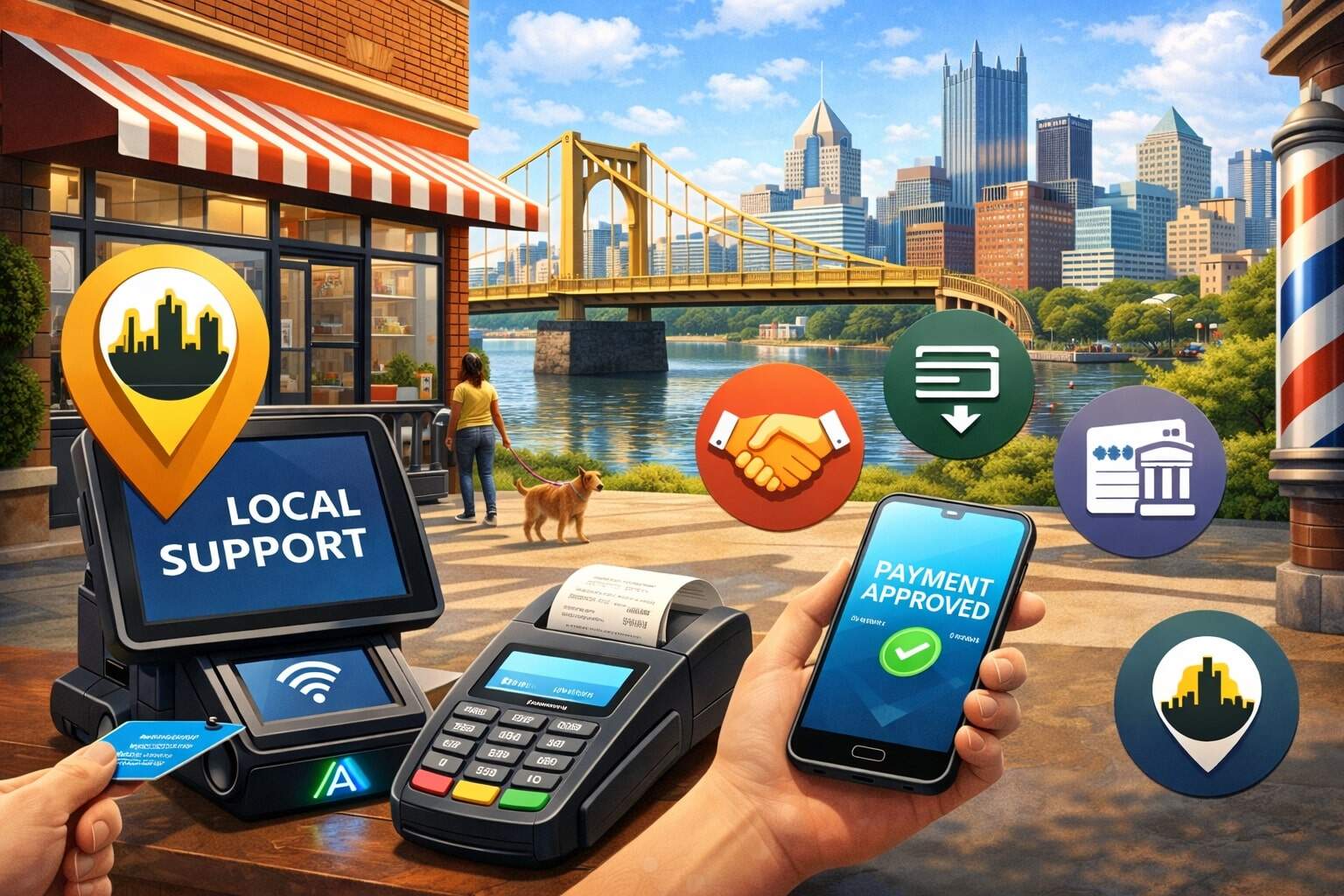
Running a business in Pittsburgh means serving customers who expect fast, frictionless checkout—whether they’re tapping a phone in Lawrenceville, paying an invoice from a Downtown office, or ordering online for pickup in the Strip District.
Payments are no longer “just a terminal.” They touch cash flow, staffing, customer experience, fraud risk, dispute handling, accounting, and even reputation.
That’s why local payment support matters. When your card reader freezes during a lunch rush, you don’t need a generic ticket number and a 48-hour callback.
You need a real human who understands your setup, your business hours, local connectivity realities, and the way Pittsburgh customers actually pay. The same is true for chargebacks, PCI questions, batch settlement issues, POS integrations, and “why did my deposits change today?” moments.
In this guide, you’ll learn what local payment support really means, how it reduces downtime and protects revenue, where it has the biggest impact by industry, and how Pittsburgh businesses can future-proof their payment stack with emerging rails like instant payments.
The goal is simple: help you build a payment system that is stable, transparent, compliant, and ready for what’s next—without sacrificing the personal help you need when it counts.
Pittsburgh’s payment environment: fast-moving, neighborhood-driven, and highly competitive

Pittsburgh has a unique mix of industries—healthcare, education, manufacturing, tech, tourism, and a thriving small business scene with restaurants, bars, boutiques, contractors, and professional services.
That diversity creates a wide range of payment needs. Some businesses rely on high-ticket invoices and recurring billing. Others live and die by speed at the counter. Many do both, juggling online orders, in-person sales, delivery, subscriptions, and events.
In a market like this, the smallest payment failure can cost more than the processing fee you worked so hard to negotiate. A terminal outage during a Steelers weekend or a major convention can mean lost sales you’ll never recover.
A deposit delay can mean payroll stress. A confusing statement can hide cost creep for months. And when a customer disputes a purchase, slow response can turn a winnable case into a loss.
This is where local payment support becomes more than convenience—it becomes risk management. Local support teams are more likely to understand the realities of local internet providers, typical peak hours, regional shopping patterns, and the operational cadence of Pittsburgh businesses.
They can also coordinate onsite help or rapid replacements faster than providers that operate purely through remote queues.
As payment technology changes quickly—contactless, mobile wallets, invoicing tools, instant payments—Pittsburgh businesses benefit most when they have support that can translate change into practical steps. That’s the difference between owning payment tech and being owned by it.
What “local payment support” actually means (and what it is not)

A lot of providers claim they have “support,” but local payment support is a specific, measurable capability. At its best, local payment support is a service model designed to reduce downtime, simplify operations, and keep revenue predictable. It usually includes a combination of proactive setup, fast troubleshooting, and real accountability.
Local payment support includes real implementation, not just shipping hardware
Local payment support starts before you ever take a payment. It means someone helps configure your MID setup correctly, maps tax rules, ensures tips and prompts work as intended, and verifies your POS integration.
It also includes testing edge cases like partial approvals, split payments, returns, and offline mode. If you’ve ever discovered a problem only after the first weekend of sales, you already know why this matters.
Local payment support includes faster escalation when money is at stake
When you have an issue that impacts deposits, chargebacks, or customer disputes, speed matters. Local payment support typically means you can reach a person who can escalate internally and explain what’s happening in plain language—without bouncing between departments that don’t share context.
Local payment support is not just “a local phone number”
A local area code doesn’t guarantee local help. Some providers route calls to outsourced centers with limited authority. True local payment support is defined by outcomes: faster resolution, fewer repeat issues, clearer explanations, better training, and accountability when something breaks.
If you want a practical definition: local payment support is a payment relationship where help is immediate, competent, and invested in your long-term performance—not just your transaction volume.
Downtime is expensive: why Pittsburgh businesses need faster on-the-ground troubleshooting
Payment downtime is one of the most painful problems because it hits revenue instantly. For retail and restaurants, a broken checkout experience doesn’t just reduce sales—it damages trust.
Customers may walk out, abandon carts, or decide your business feels unreliable. Even when customers want to pay, failed transactions create awkward moments that slow lines and increase staff stress.
Local payment support reduces downtime in three main ways:
1) Faster diagnosis of the real issue
Many payment failures are misdiagnosed as “the terminal is broken.” In reality, the cause could be a network change, a router setting, a POS update, an incorrect firewall rule, or a gateway mismatch.
Local payment support teams that routinely work with regional small businesses can identify patterns quickly and fix the root cause instead of applying temporary workarounds.
2) Better redundancy planning
A strong local payment support approach helps you create a backup plan: a secondary terminal, a mobile reader, a virtual terminal, offline mode configuration, and a clear “what to do when” playbook for staff. This preparation turns a crisis into a manageable inconvenience.
3) Quicker hardware replacements and onsite coordination
When hardware truly fails, shipping delays and complicated RMA processes cost money. Local payment support often means faster swaps, onsite checks, or at least immediate configuration help when new equipment arrives. The goal is to keep you selling, not waiting.
If your business depends on peak hours—lunch, weekends, events—then local payment support isn’t optional. It’s the difference between a short disruption and a full-day disaster.
Deposits, cash flow, and funding: local payment support keeps money predictable
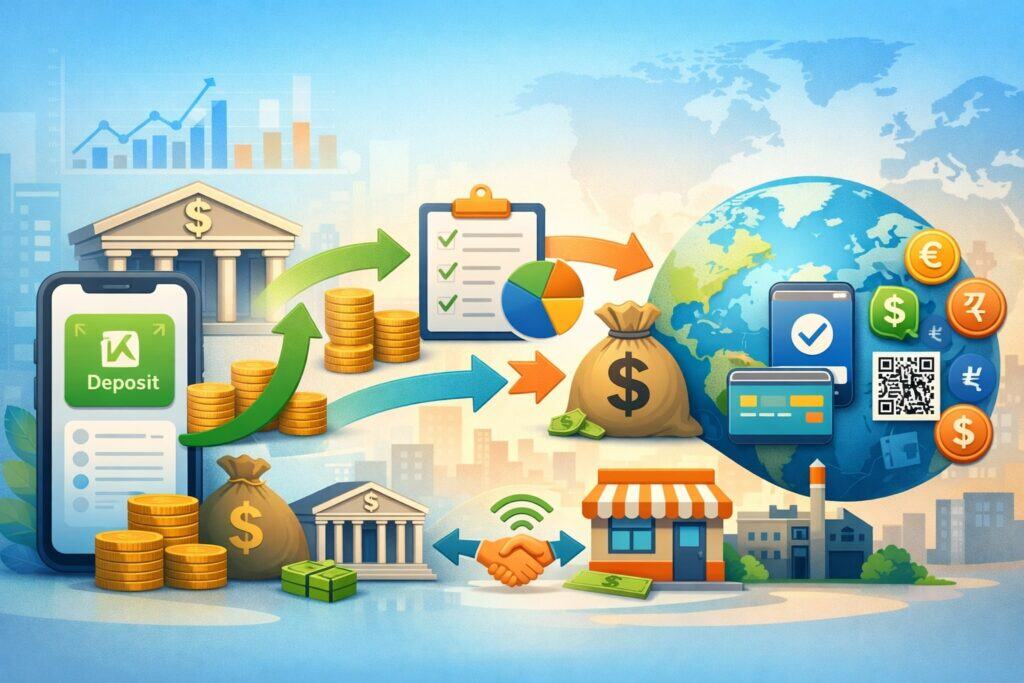
For many Pittsburgh businesses, the most stressful payment issue isn’t a declined card—it’s a deposit that doesn’t show up when expected. Cash flow uncertainty affects payroll, inventory, vendor payments, and loan obligations.
And when deposits are delayed or reduced due to unexpected holds, rolling reserves, or chargeback losses, the business owner is left scrambling. Local payment support helps protect cash flow through:
Clear deposit timelines and same-day visibility
You should know when batches close, when funds settle, and what causes delays. Local payment support teams are more likely to walk you through deposit timing, cutoff schedules, and practical habits that keep funding consistent.
Faster resolution of settlement and batch issues
Sometimes deposits fail because a batch didn’t close, a POS update interrupted settlement, or a terminal got stuck. Local payment support can guide you through re-settlement, duplicate prevention, and safe troubleshooting—without risking double charges.
Smarter underwriting and fewer surprise holds
A good local payment support relationship often means better upfront underwriting and realistic risk settings. That reduces the chance of sudden freezes when you have a busy month, launch a new product, or start running larger tickets.
As instant payment rails expand, expectations for speed rise. The Federal Reserve’s FedNow Service reported growing participation and adoption over time, reflecting broader momentum toward 24/7/365 instant payments.
While not every business will receive every payout instantly today, the direction is clear: faster money movement is becoming normal, and businesses will need support teams who can explain how these rails impact funding and reconciliation.
Compliance and disputes: Pittsburgh businesses need local guidance that prevents costly mistakes

Compliance is where “cheap processing” becomes expensive. Most businesses don’t wake up wanting to learn about PCI scope, EMV liability shifts, or card network dispute rules. But mistakes in these areas can lead to data exposure, fines, frozen funds, or repeated chargeback losses.
Local payment support is valuable here because it turns compliance into a practical routine rather than a confusing checklist.
PCI and data security done the right way
Strong support helps you reduce PCI scope, use tokenization appropriately, secure Wi-Fi networks, rotate passwords, and manage employee access. Many small businesses unknowingly increase risk by storing card data improperly or using insecure workarounds when their POS is slow.
Chargeback response that’s fast, organized, and winnable
Chargebacks are time-sensitive. Local payment support can help you build templates for receipts, delivery proof, refund policies, and service agreements. It also helps you respond with the right evidence the first time.
Surcharging and fee disclosure: rules are changing
If you use a credit card surcharge or cash discount program, you need to follow rules carefully. Pennsylvania has seen legislative activity around disclosure and surcharge limits, emphasizing that any surcharge should be disclosed and not exceed actual processing cost.
(This is not legal advice, but it highlights why businesses should treat surcharge setup as a compliance project, not a plug-and-play switch.)
When compliance is supported locally, the business is less likely to “set it and forget it” and more likely to stay aligned with evolving expectations.
Industry-specific needs: local payment support matters more in restaurants, retail, services, and healthcare-adjacent businesses
Payments don’t behave the same across industries. A coffee shop has different risk, workflows, and customer expectations than a contractor or clinic. Pittsburgh businesses benefit from local payment support when it’s tailored to the realities of their sector.
Restaurants and bars
Restaurants need tip flows, bar tabs, split payments, gift cards, and fast EMV/contactless performance. They also need support during peak hours—because a Saturday night outage is not the same as a Tuesday morning glitch. Local payment support helps tune prompts, train staff, and reduce void/refund errors that lead to disputes.
Retail and specialty stores
Retailers need SKU-level reporting, returns, exchanges, loyalty tools, and sometimes multi-location inventory. Local payment support becomes critical when POS integrations fail, scanners stop pairing, or tax rules get misapplied.
Home services and field businesses
Contractors and service professionals need mobile payments, invoicing, recurring billing, and partial payments tied to project milestones. Local payment support helps ensure invoices reconcile to deposits and reduces risk when ticket sizes increase.
Healthcare-adjacent and professional services
These businesses often require more secure workflows, better authorization controls, and careful handling of card-not-present transactions. Local payment support helps lower fraud exposure, tighten permissions, and reduce costly chargebacks.
The most important point: local payment support isn’t one-size-fits-all. It should reflect how your business earns money.
Omnichannel operations: local payment support helps connect in-person, online, and invoicing
Customers no longer separate “online” and “in-store.” They browse online, buy in person, return by mail, pay invoices from a phone, and expect receipts everywhere. For Pittsburgh businesses, omnichannel capability is now a baseline expectation, not a luxury.
Local payment support helps omnichannel in several practical ways:
Unified reporting and fewer blind spots
Without proper configuration, online transactions and in-person transactions can land in separate systems with inconsistent fees and reporting. Local payment support helps unify gateways, descriptors, receipts, and settlement data so accounting stays clean.
Better customer experience across channels
Customers notice friction: extra steps, broken links, limited payment methods, or inconsistent refund policies. Local payment support helps standardize policies and ensure payments “feel” consistent whether the customer is tapping at the counter or paying a text-to-pay invoice.
Easier integrations with POS, ecommerce, and accounting
Integrations are where businesses lose the most time. When a plugin update breaks checkout or a POS sync stops, local payment support can help you restore functionality without losing transaction history or creating reconciliation chaos.
As contactless and mobile wallet usage continues to rise, businesses need setups that are both modern and stable. Surveys and industry analysis increasingly highlight reliability and fee pressure as top concerns for SMEs adopting newer payment methods. Local payment support helps you adopt new options without turning your checkout into an experiment.
Fees, pricing, and transparency: local payment support helps Pittsburgh businesses control costs
Processing costs aren’t just about a rate. They’re a system of interchange, assessments, processor markup, gateways, chargebacks, monthly fees, equipment leases, and incidental charges that often hide in fine print. Many businesses don’t realize their costs increased until months later.
Local payment support improves cost control through:
Statement reviews that translate numbers into actions
A helpful support team will show you what’s driving the cost: card mix, rewards cards, keyed transactions, downgrades, batch timing, or non-compliance fees. Then they’ll give you operational steps that actually reduce costs.
Smart routing and acceptance optimization
If your checkout pushes too many transactions into higher-cost categories (like keyed entries instead of chip/tap), costs rise. Local payment support can fix prompts, training, and device settings that reduce expensive transaction types.
Surcharge and cash discount programs set up correctly
Many businesses try to offset costs with pricing programs. But if you do it incorrectly, you can trigger complaints, lost customers, or compliance issues. Pennsylvania’s policy environment and proposed legislative language emphasize disclosure and limits tied to actual costs.
That makes it even more important to implement these programs carefully, with clear signage, correct receipts, and accurate rate caps.
The goal isn’t just “lower fees.” The goal is predictable, transparent fees that match your business model—supported by people who will explain changes before they hit your bottom line.
Security and fraud: local payment support reduces risk without adding friction
Fraud is evolving quickly. Small businesses are targeted because attackers assume defenses are weaker. At the same time, customers demand fast, seamless checkout. The best security strategy reduces risk without turning payment into a slow obstacle.
Local payment support helps here by:
Encouraging safer acceptance methods
Chip and contactless transactions generally reduce certain counterfeit risks compared to swiped or keyed payments. Local payment support helps you keep terminals updated and configured for safer acceptance patterns.
Setting smart controls for card-not-present payments
For online checkout and invoices, support can help implement AVS, CVV checks, 3DS where appropriate, velocity controls, and fraud screening. These tools should be tuned to your business so legitimate customers aren’t blocked.
Reducing internal risk
A surprisingly common problem is internal misuse: too many staff permissions, weak passwords, shared logins, or poor refund controls. Local payment support can help design role-based access and audit-friendly workflows.
Large networks and industry leaders increasingly predict more AI-driven fraud and more AI-driven defense, along with growing use of tokenization and identity signals. The future will reward businesses that have support partners who can update controls as threats change—without forcing owners to become security engineers.
Faster payments and modern rails: how local payment support helps you prepare for what’s next
Payments are expanding beyond cards. Instant payments are becoming more common for payroll, payouts, B2B invoices, and account-to-account transfers. This trend matters because it changes expectations: businesses will want faster access to funds and more options for paying suppliers and contractors.
Two major instant payment systems have shown strong growth:
- The Federal Reserve’s FedNow Service reported significant participant growth over time after launch, reflecting increasing adoption and innovation in instant payments.
- The Clearing House RTP network has also highlighted major milestones in transaction volume, signaling accelerating usage.
So where does local payment support fit?
It helps you connect the “new rails” to real workflows
Instant payments aren’t helpful if your accounting can’t reconcile them, if your staff doesn’t know how to issue refunds, or if your customer support can’t explain payment options. Local payment support bridges the gap between payment theory and daily operations.
It helps you evaluate use cases
Not every business needs instant payouts. But many Pittsburgh businesses can benefit from faster invoice settlement, contractor payments, emergency supplier payments, or customer refunds. Local payment support can help identify where instant rails reduce friction and where cards still make sense.
It helps you future-proof without overhauling everything
The smartest path is usually hybrid: keep cards and wallets for consumer convenience, add account-to-account options for invoices and payouts, and ensure reporting stays unified.
In short, local payment support helps you adopt modern payments at the pace your business can actually sustain.
What to look for in a local payment support partner in Pittsburgh
Choosing a provider isn’t just picking a rate—it’s choosing how problems get handled for years. Use this checklist to evaluate true local payment support.
Responsiveness and escalation
- Do you get a dedicated contact or team?
- Are response times defined for outages and deposit issues?
- Can support escalate to underwriting, risk, and gateway teams quickly?
Implementation quality
- Do they test your setup end-to-end before launch?
- Do they handle POS integrations and updates?
- Do they train staff with a real process, not just a PDF?
Transparency and reporting
- Do they provide clear statements and explain fees?
- Do they offer reporting that matches your accounting needs?
- Can you see transactions, batches, and deposits in one place?
Risk and compliance guidance
- Do they help with PCI scope reduction and best practices?
- Do they provide chargeback support and evidence guidance?
- If you surcharge, do they help ensure disclosure and caps are configured properly?
Flexibility for the future
- Can they support mobile wallets, invoicing, subscriptions, and ecommerce?
- Do they have a path for instant payments and modern payout options?
- Do they keep hardware and software updated without breaking your flow?
When local payment support is real, you feel it: fewer surprises, faster fixes, better explanations, and a payment setup that gets better over time instead of slowly degrading.
Future predictions: where Pittsburgh payments are heading in 2026 and beyond
Several trends are shaping the next phase of payments for Pittsburgh businesses. The big story is that payments are becoming more embedded, more automated, and more intelligence-driven—while customer expectations for speed and convenience keep rising.
AI in checkout, fraud prevention, and customer support
Major payment networks and industry leaders expect AI to play a bigger role in commerce and payments experiences. For small businesses, this could mean smarter fraud filtering, better chargeback prevention, and more automated reconciliation.
It may also bring AI-driven customer support tools—though businesses will still need human-grade help for urgent issues.
Contactless dominance and the decline of friction
Mobile wallets and tap-to-pay are increasingly standard. Businesses that still rely on swipe-heavy workflows will face higher fraud risk and more customer frustration. Local payment support will matter because adopting new acceptance methods often triggers configuration challenges and staff retraining needs.
Instant payments expanding beyond banks into everyday business workflows
The growth signals from major instant payment systems suggest businesses will see more tools that use instant rails for payouts, payroll-like flows, supplier payments, and refunds. The winners will be the businesses that can integrate instant payments into accounting and customer service without confusion.
Greater scrutiny on fee disclosure and consumer clarity
As businesses seek ways to manage processing costs, disclosure and transparency will matter more. Pennsylvania’s legislative activity around surcharging language underscores the importance of doing fee programs clearly and correctly.
The headline prediction is simple: Pittsburgh businesses will need payments that are faster and smarter—but also supported locally, because complexity without support becomes operational risk.
FAQs
Q.1: What is local payment support in practical terms?
Answer: Local payment support means you can get fast help from people who understand your setup and can fix issues that affect sales and deposits. It includes onboarding, troubleshooting, chargeback guidance, and proactive optimization—not just a generic helpline.
Q.2: Is local payment support only for large businesses?
Answer: No. In many cases, small and mid-sized businesses benefit more because they don’t have internal IT or payments staff. Local payment support acts like an extension of your operations team, helping prevent downtime and confusing funding issues.
Q.3: How does local payment support reduce chargebacks?
Answer: It helps you tighten policies, improve receipts and proof-of-service documentation, and respond on time with the right evidence. It can also reduce risky transaction types by improving checkout configuration and training.
Q.4: Should my Pittsburgh business add surcharging or cash discounting?
Answer: It depends on your customer base and margins. If you do it, it must be implemented carefully with clear disclosure, accurate receipts, and compliance with applicable rules. Pennsylvania has seen proposed language emphasizing disclosure and limits tied to actual costs. Consider professional guidance if you’re unsure.
Q.5: Are instant payments replacing cards?
Answer: Not fully. Cards remain popular for consumer convenience and rewards. Instant payments are growing as an option for invoices, payouts, and account-to-account transfers, supported by expanding networks and participation. Most businesses will use a mix.
Q.6: What’s the biggest mistake businesses make when choosing a payment provider?
Answer: Optimizing only for a low advertised rate. The true cost often shows up later as downtime, unclear fees, deposit confusion, integration failures, or poor dispute handling. Local payment support helps avoid those hidden costs.
Conclusion
Payments are now part of your customer experience, your risk posture, and your cash flow strategy. In Pittsburgh’s fast-moving, competitive environment, businesses can’t afford to treat payments like a commodity. A low rate won’t help when your terminal fails at peak hours, when deposits don’t land on time, or when chargebacks start stacking up.
That’s why local payment support matters. It reduces downtime, simplifies reconciliation, strengthens compliance, improves customer experience, and helps you adopt modern payment options without operational chaos.
As payment trends accelerate—AI-enabled commerce, broader contactless adoption, and expanding instant payment rails—Pittsburgh businesses will rely even more on support teams who can translate change into reliable day-to-day operations.
If you want a payment system that’s built to last, prioritize a partner who offers real accountability, clear communication, and hands-on help. In the long run, local payment support isn’t a perk—it’s protection for your revenue and a foundation for growth.