By pittsburgh-merchantservices October 1, 2025
Payment gateways have become an indispensable part of the digital economy. As online and card-not-present transactions continue to rise globally, the role of gateways extends far beyond mere transaction facilitation.
They are the gatekeepers of sensitive payment information, the enablers of trust between customers and businesses, and the silent protectors against fraud. Without secure and efficient payment gateways, e-commerce and digital transactions would lack credibility, potentially stalling the growth of modern commerce.
In this comprehensive guide, we will explore the fundamental role payment gateways play in secure transactions. From their underlying technologies and security protocols to their real-world applications and compliance requirements, this article will provide an in-depth look into why payment gateways are critical for businesses, customers, and the global financial ecosystem.
Understanding What a Payment Gateway Is
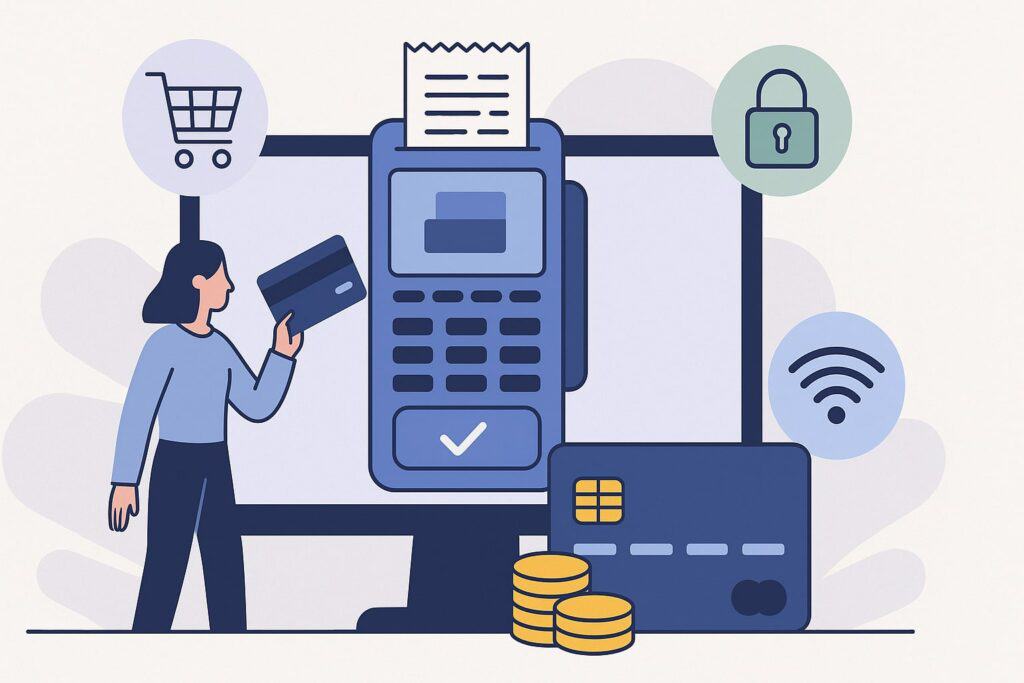
A payment gateway is a technology solution that acts as the intermediary between a customer, a merchant, and the financial institution that processes payments.
When a customer makes a purchase online or in-store, the payment gateway securely captures payment data (such as credit card numbers or digital wallet details) and transmits it for authorization, ensuring that sensitive information is encrypted and protected throughout the process.
At its core, a gateway is not just a channel but a security checkpoint. It ensures that data cannot be intercepted or manipulated by malicious actors.
For example, when you enter your credit card details into an online store, the payment gateway encrypts the data before sending it to the payment processor and ultimately the acquiring bank. Once verified, the transaction is either approved or declined, and this status is communicated back to the merchant and customer.
One of the major misconceptions about payment gateways is that they are solely about processing transactions. In reality, gateways serve a much broader function.
They integrate with fraud detection tools, comply with strict industry standards such as PCI DSS (Payment Card Industry Data Security Standard), and often incorporate AI-driven risk analysis.
Many advanced gateways can analyze behavioral patterns—such as geolocation, device information, and transaction history—to identify potentially fraudulent transactions before they are completed.
The increasing diversity of payment methods also makes gateways essential. From credit and debit cards to digital wallets like Apple Pay, Google Pay, PayPal, and even emerging methods like cryptocurrency, payment gateways provide the infrastructure that allows businesses to accept payments securely and seamlessly.
Without them, merchants would face the immense challenge of individually integrating with numerous banks and financial networks while ensuring robust security.
In short, a payment gateway is the foundation of modern payment ecosystems, providing trust, convenience, and security to all parties involved.
The Importance of Security in Payment Gateways
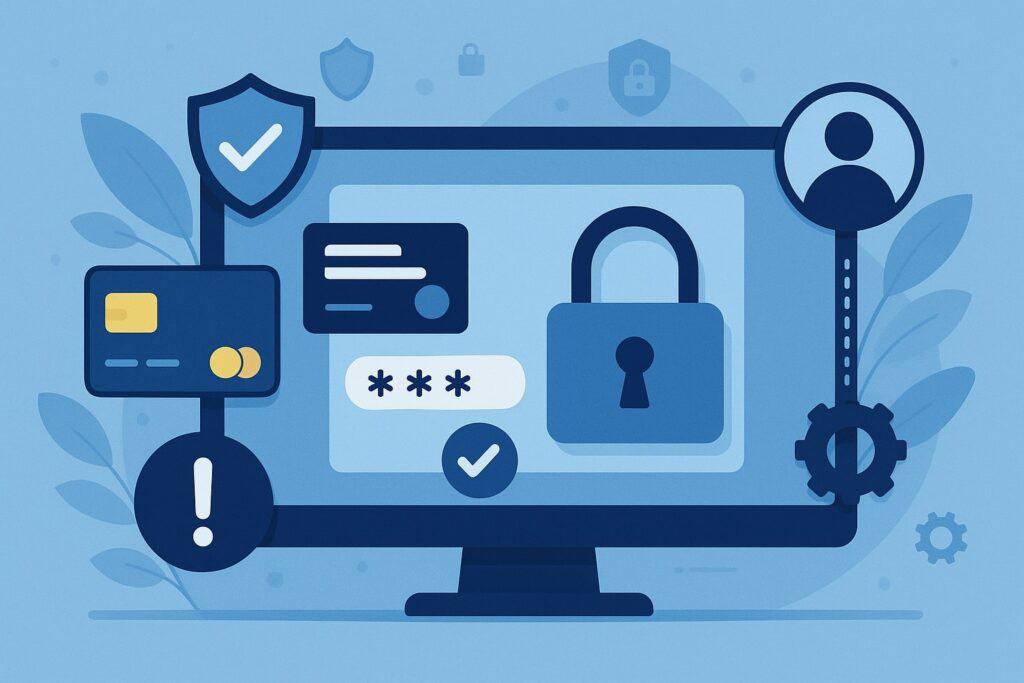
Security is the single most critical component of payment gateways. With billions of digital transactions occurring daily, the risks of fraud, data breaches, and identity theft are higher than ever. A payment gateway that does not prioritize security can put businesses and consumers at immense financial and reputational risk.
To mitigate these risks, gateways employ a variety of security measures:
- Encryption: Sensitive payment data is converted into unreadable code during transmission. Even if intercepted, the data is useless without the decryption keys.
- Tokenization: Payment gateways often replace sensitive cardholder details with randomly generated tokens. This ensures that merchants never directly handle actual card data, reducing the risk of breaches.
- SSL (Secure Socket Layer) Certificates: SSL ensures secure connections between customers and merchants, preventing data interception.
- PCI DSS Compliance: Gateways must adhere to strict industry standards to protect cardholder data. Compliance includes regular security audits, network monitoring, and vulnerability management.
- Fraud Detection and Machine Learning: Many gateways now leverage AI and machine learning to detect suspicious activities. These tools can block high-risk transactions based on unusual spending patterns, location mismatches, or multiple failed attempts.
The consequences of inadequate security are dire. Businesses that fail to protect customer data face not only financial losses due to chargebacks but also regulatory fines and irreparable damage to their brand reputation. Customers, too, may lose trust in digital transactions, which can slow down adoption rates and affect overall market growth.
By prioritizing security, payment gateways create confidence for all parties. When consumers feel assured that their personal and financial details are safe, they are more likely to engage in digital commerce. This is why security is not just a technical necessity but also a driver of trust and customer loyalty.
How Payment Gateways Facilitate Secure Online Transactions
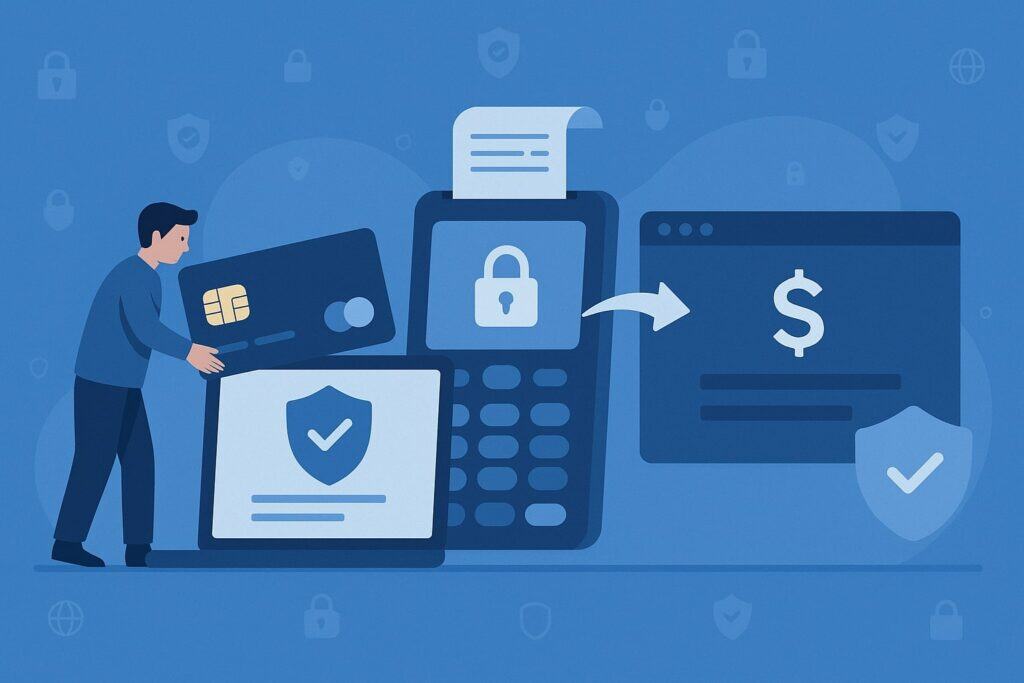
When a customer decides to buy something online, the process that follows may seem instantaneous, but behind the scenes, a highly secure sequence of events is taking place. The role of the payment gateway is to make this complex series of steps both invisible and seamless for the end user.
Here’s how the process works in a secure online transaction:
- Transaction Initiation: A customer selects products/services and proceeds to checkout.
- Data Encryption: When the customer enters their card details, the gateway encrypts the information to prevent exposure.
- Transaction Routing: The encrypted data is sent to the payment processor, which communicates with the customer’s issuing bank.
- Authentication: Many gateways integrate with 3D Secure protocols (like Verified by Visa or Mastercard SecureCode) to authenticate the customer and ensure they are the legitimate cardholder.
- Authorization or Decline: The issuing bank checks whether the customer has sufficient funds and whether the transaction is legitimate. It then approves or declines the request.
- Response to Merchant: The gateway transmits the result to the merchant. If approved, the order is confirmed.
- Settlement: Funds are transferred from the customer’s bank to the merchant’s acquiring bank, completing the transaction.
At every stage, multiple layers of security ensure that sensitive information is never exposed. The gateway shields both the merchant and the customer from potential fraudsters while also ensuring compliance with regulatory requirements.
In many ways, the gateway serves as a trusted digital vault—holding, encrypting, and transmitting data with integrity. Without gateways, merchants would have to assume responsibility for managing and securing sensitive cardholder information, something that would be nearly impossible at scale.
Emerging Technologies in Payment Gateways
As digital transactions evolve, so too do payment gateways. Emerging technologies are redefining how gateways provide security, speed, and convenience.
- AI and Machine Learning: These technologies power fraud detection systems that can analyze massive datasets in real-time. By recognizing patterns, gateways can block suspicious activity before harm occurs.
- Blockchain: Blockchain introduces decentralized and tamper-resistant ledgers, which can enhance transparency and reduce fraud in payment processing. While adoption is still limited, blockchain-powered gateways could reshape transaction verification.
- Biometric Authentication: Many gateways now integrate fingerprint, face recognition, or voice ID to add an extra layer of security beyond passwords and PINs.
- Cryptocurrency Integration: With digital currencies gaining popularity, some gateways are enabling merchants to accept Bitcoin, Ethereum, and stablecoins, offering more flexibility to customers.
- Tokenization Advancements: Beyond traditional card tokenization, new approaches are extending to recurring billing, subscriptions, and one-click checkouts.
The adoption of these technologies reflects the growing demand for faster, safer, and more user-friendly transactions. In a digital-first economy, customers expect instant approvals, minimal friction, and robust security. Payment gateways that fail to innovate risk being left behind.
Challenges Faced by Payment Gateways
Despite their critical role, payment gateways face several challenges:
- Fraud and Cybercrime: As security measures improve, fraudsters develop new techniques. Gateways must constantly evolve to stay ahead.
- Regulatory Compliance: Adhering to international and local financial regulations (like PSD2 in Europe or PCI DSS globally) requires significant investment.
- Cross-Border Payments: Handling multiple currencies, languages, and local compliance frameworks adds complexity for global gateways.
- User Experience: Customers expect seamless checkout experiences. Balancing security with convenience is a constant challenge.
- Integration Costs: For small businesses, integrating advanced gateways can be expensive and technically demanding.
The success of payment gateways lies in their ability to overcome these challenges while maintaining security and reliability.
Frequently Asked Questions (FAQs)
Q1. Why are payment gateways necessary if banks already process payments?
Answer: While banks are responsible for authorizing and settling payments, they do not provide the infrastructure that securely transmits payment details from the customer to the bank. Payment gateways act as the secure bridge between merchants, customers, and banks.
They encrypt sensitive data, manage fraud checks, and ensure smooth communication between all parties. Without gateways, merchants would have to handle sensitive data themselves, increasing the risk of breaches and non-compliance with regulations.
Furthermore, gateways also enable businesses to accept a wide range of payment methods—from credit cards to digital wallets and even cryptocurrency. This flexibility enhances customer experience and helps merchants stay competitive in a digital-first economy.
Q2. Are payment gateways safe for small businesses?
Answer: Yes, payment gateways are designed to protect businesses of all sizes. For small businesses in particular, gateways provide access to enterprise-level security features—such as encryption, tokenization, and fraud detection—without requiring in-house expertise.
Many providers offer affordable plans and easy integrations tailored to startups and small merchants. By outsourcing payment security to a reliable gateway, small businesses can focus on growth while maintaining customer trust. In fact, using a payment gateway is often safer than attempting to manage payment processing independently.
Q3. How do payment gateways handle international transactions?
Answer: International transactions involve additional complexities, including currency conversion, local regulations, and fraud risks. Payment gateways simplify this by offering multi-currency support, localized checkout experiences, and compliance with global standards.
Advanced gateways often have partnerships with international acquiring banks, enabling merchants to expand into new markets without major infrastructure changes.
They also use AI-based risk management to detect unusual cross-border fraud attempts. As global e-commerce grows, international support has become a defining feature of competitive payment gateways.
Q4. What is the difference between a payment gateway and a payment processor?
Answer: A payment gateway is the technology layer that securely transmits payment information from customers to the payment processor. The processor, on the other hand, is responsible for communicating with the issuing and acquiring banks to authorize and settle the transaction.
Think of it this way: the gateway is the digital vault and communication channel, while the processor is the back-office engine that executes the financial transaction. Both are critical components of modern payment systems.
Q5. How will payment gateways evolve in the future?
Answer: The future of payment gateways will be shaped by AI, blockchain, and biometrics. As fraud techniques become more sophisticated, gateways will rely heavily on machine learning for predictive risk management. Blockchain may also introduce greater transparency and trust.
Moreover, as consumer preferences shift toward digital wallets and alternative payment methods, gateways will expand their offerings. They will need to adapt quickly to innovations like central bank digital currencies (CBDCs) and real-time payments.
Ultimately, gateways will continue to balance security, speed, and convenience in shaping the future of commerce.
Conclusion
Payment gateways are more than just intermediaries; they are the backbone of secure digital commerce. By providing encryption, fraud prevention, compliance, and seamless integration, they enable businesses to thrive in an increasingly digital world.
Customers trust gateways to safeguard their sensitive data, and businesses rely on them to expand payment options and maintain credibility.
As technology advances and the threat landscape evolves, the role of payment gateways will only grow more significant. For merchants, choosing the right gateway is not just a technical decision but a strategic one that directly impacts customer trust, security, and long-term success.