
By pittsburgh-merchantservices October 1, 2025
Running a business in Pittsburgh comes with plenty of wins—loyal customers, a resilient economy, and a tight-knit community across neighborhoods from the Strip District to Squirrel Hill, South Side to North Hills.
But whether you run a coffee bar on Butler Street or a B2B service firm in Robinson Township, payment processing fees can quietly erode your margins. The good news: you have far more control over your card costs than most processors want you to think.
This guide is a deep, practical playbook written for Pittsburgh merchants to understand every line item on a statement, pick the right pricing model, negotiate like a pro, deploy smart technology, and stay compliant while lowering total cost of acceptance (TCA).
We’ll translate the jargon (interchange, assessments, markups), show you what actually moves the needle, and map the tactics to real-world storefront, mobile, and invoice-based use cases.
You’ll also find local-centric tips—like optimizing for weekend foot traffic by reducing authorization downgrades during busy Penguins game nights, or tightening card-not-present (CNP) flows for professional services firms that invoice customers throughout Allegheny County.
By the end, you’ll know how to read statements with confidence, benchmark your effective rate, and implement a prioritized cost-reduction plan without degrading customer experience.
Keep this open as a checklist; apply one section per week and you’ll see your effective rate drop steadily while your authorization approvals and cash flow improve.
Pittsburgh Merchant Cost Foundations: What You’re Really Paying For (and Why It Adds Up)
Before you can reduce card fees, you need to understand the layers in the price stack. Every merchant—whether in Lawrenceville or Mt. Lebanon—pays three broad categories of costs when accepting cards.
First is interchange, set by the card networks and paid to the card-issuing banks; it varies by card type (debit vs. rewards credit), transaction method (chip-and-PIN vs. keyed), and data quality (are you passing AVS/CVV for CNP?).
Second are network assessments, the small per-transaction or percentage-based fees charged by Visa, Mastercard, and others. Third is your processor markup, which covers gateway access, risk tools, customer support, terminals, and profit.
While interchange and assessments are non-negotiable baseline costs, they are still influenceable through your acceptance strategy: how you route transactions, authenticate customers, and capture the right data to avoid “downgrades.”
Your markup, by contrast, is negotiable and where most savings come from quickly. The key to Pittsburgh businesses is acknowledging the transaction mix driven by local patterns: heavy weekend and event traffic for restaurants and retail near PNC Park and PPG Paints Arena (more in-person chip/Tap), steady weekday invoices for B2B, trades, and professional services across Oakland and Downtown (more CNP).
Each mix has distinct cost drivers. For example, a quick-serve counter in Station Square might be dominated by small-ticket Tap-to-Pay debit, where optimizing for regulated debit routing and card-present best practices delivers outsized savings.
By contrast, a home services business in Cranberry Township sending emailed invoices may pay unnecessary surcharges if they’re not tokenizing cards and passing AVS, or if they’re using a flat-rate provider that masks interchange optimizations.
Start by calculating your effective rate—total fees divided by total card volume—which gives you a single benchmark. If your effective rate is above ~2.5–3.0% for a mostly in-person mix or above ~3.0–3.4% for CNP-heavy mixes, you likely have material room to improve.
Pair that with a 90-day statement audit to isolate high-cost bins (premium rewards, corporate cards), downgrade categories (EIRF/Standard), and junk fees (PCI non-compliance, excessive statement fees, batch fees you don’t need).
Once you see where the money is going, you can prioritize changes with the best ROI. The rest of this guide shows you how to systematically chip away at each driver without adding friction for your customers.
Choosing the Right Pricing Model for Pittsburgh Businesses: Interchange-Plus, Membership, or Flat-Rate?
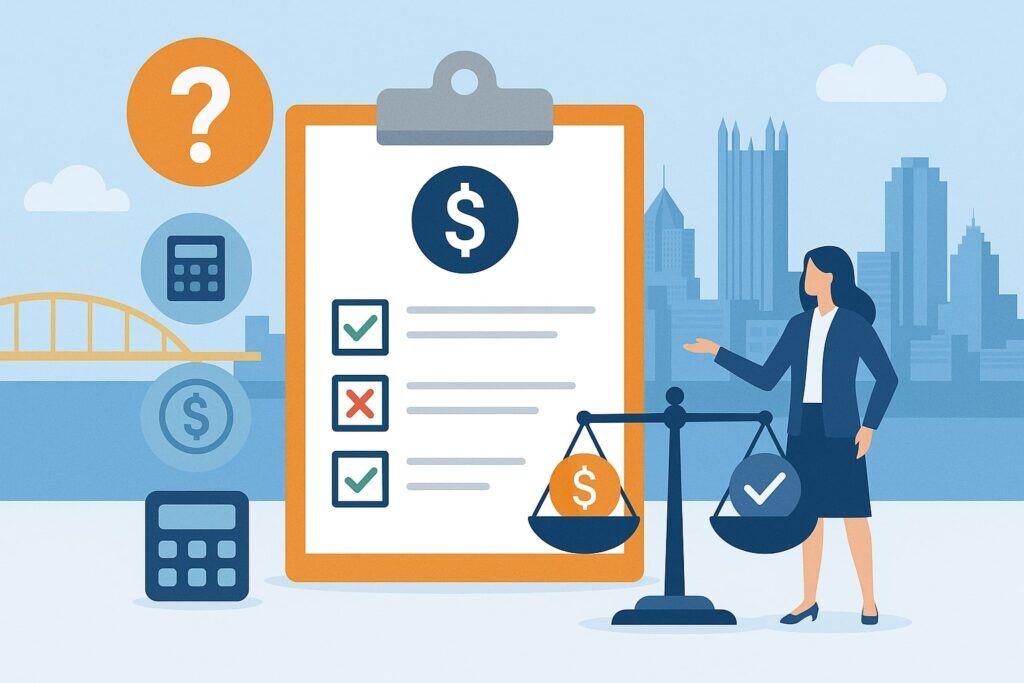
If you remember one lesson, it’s this: pricing model selection is the single biggest lever you control. Flat-rate plans (e.g., a single percentage plus a fixed per-transaction fee) are popular because they’re simple, but simplicity often hides margin.
They can be fine for very low volume or pop-up sales—say, a vendor at the Bloomfield Saturday Market testing a new concept—but once you pass roughly $15–20k/month, you’ll often overpay versus a transparent model.
Interchange-plus pricing breaks out the true wholesale cost (interchange + assessments) and then adds a clearly stated markup (e.g., basis points plus a per-item fee). This transparency lets you audit and optimize.
For businesses with consistent volume—restaurants on Carson Street, boutiques in Shadyside, wellness clinics across the East End—interchange-plus is usually more economical, especially if your processor supports automatic Level 2/3 data for commercial cards and solid debit routing.
Membership or subscription pricing (sometimes called “wholesale” or “cost-plus membership”) charges a fixed monthly fee in exchange for very low per-transaction markups. It works well for higher-volume merchants who want predictable costs and have a relatively stable transaction mix; think multi-location coffee chains or busy auto shops serving the entire South Hills.
The caution: make sure your provider isn’t layering extra “non-standard” fees on top of the membership that recreate flat-rate economics. Whatever you choose, insist on a written pricing schedule, no tiered categories (“qualified,” “mid-qualified,” “non-qualified”) that float unpredictably, and a markup expressed explicitly in basis points + per-item terms.
Then benchmark quarterly. If your mix shifts—more CNP invoices in winter, more tap-to-pay in summer festivals—ask your provider to tune the package. Finally, check for contract gotchas: long terms, auto-renew with narrow cancellation windows, and early termination fees.
Pittsburgh’s seasonal patterns and event-driven spikes reward flexibility. You want the ability to scale devices for a Steelers game week or the Three Rivers Arts Festival and then scale back without punitive fees.
A good processor will pair the right model to your mix and set guardrails so you’re not surprised by month-end totals. As your business grows, revisit the model annually; what was optimal at $400k/year may be suboptimal at $1.2M with more corporate card spend. Treat your pricing model like inventory: review, re-order, and retire what no longer fits.
The Statement Deep-Dive: How to Audit and Negotiate Like a Pro (Without Burning Cycles)
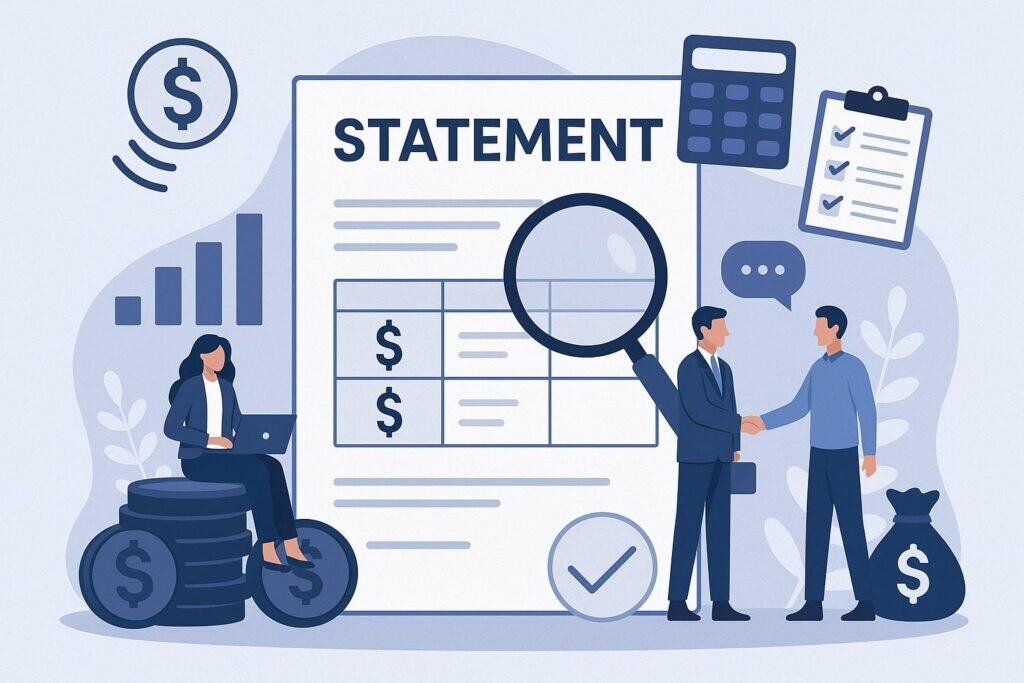
A thorough statement audit is the fastest path to savings, and you can do it in a couple of hours with a simple checklist.
Step one: compute the effective rate for the last three months (total fees ÷ total processed volume).
Step two: isolate the top five cost buckets. Look for processor markup (basis points and per-item), network assessments (fine, but verify they match publicly posted schedules), and costly “downgrades” like EIRF/Standard—often caused by missing data, late settlement, or card-not-present without AVS/CVV.
Step three: flag junk or avoidable fees—monthly “PCI non-compliance,” statement fees, batch fees on days with zero batches, “regulatory product fees,” and “optimization adders” that don’t describe a real service.
Many Pittsburgh merchants discover they’ve been paying monthly “gateway” charges even though they process exclusively in-store; if your POS has an integrated gateway, you shouldn’t also be paying for a standalone gateway you don’t use.
Next, build a simple negotiation brief: your volume, transaction count, average ticket, card-present vs. CNP split, seasonality notes (e.g., summer festivals, back-to-school spikes), and your desired target (for example, reduce markup from 25 bps + $0.10 to 10 bps + $0.06, eliminate non-standard monthly fees, and enable Level 2/3 optimization at no added cost).
Reach out to your processor and ask for a “re-underwrite” or “pricing review.” Use competitive quotes if you have them, but focus on specifics rather than threats.
Processors respond best when you show you understand the levers: “We are mostly card-present with 65% regulated debit; we will move terminals if needed to obtain debit optimization and a per-item fee aligned with our average ticket.”
If your provider is inflexible, run a side-by-side pilot with a contender for 30 days—especially easy for mobile or invoice-driven flows. But don’t switch lightly; account for retraining staff, replacing terminals, and gateway migration for recurring billing.
When negotiating, avoid giving up chargeback tools or fraud screening in exchange for a tiny rate reduction; a single fraud loss can wipe out a year’s savings. Finally, operationalize the audit: schedule a quarterly 60-minute review, automate reports, and set alerts for any surprise fee category.
Pittsburgh businesses are busy; a lightweight rhythm beats sporadic, heroic fixes. Over time, you’ll not only cut costs—you’ll stabilize them, which makes planning far easier when you’re juggling inventory, payroll, and seasonal marketing.
Card-Present Optimization in the Steel City: Hardware, Routing, and Checkout Design
For storefronts and service providers that accept cards in person, three themes dominate cost reduction: better hardware, smarter routing, and faster, data-rich checkouts. On hardware, ensure you’re using EMV-certified terminals that support contactless (NFC) and PIN debit.
Tap-to-Pay on phones is helpful for pop-ups and field service around Pittsburgh’s neighborhoods, but fixed countertop or semi-integrated devices often deliver higher reliability and fewer costly “fallback to magstripe” downgrades.
Ask your provider to enable “debit optimization” or “least-cost routing” where available, especially for regulated debit. Because Pittsburgh has a meaningful share of debit usage (think small tickets at coffee shops, pizza places, and quick service before games), routing those transactions efficiently can shave your blended costs.
At checkout, design for speed and accuracy: prompt for PIN on debit when appropriate, support digital wallets (Apple Pay, Google Pay) to improve EMV cryptogram quality, and reduce keyed entry to near zero to avoid higher CNP interchange.
Train staff to settle batches the same day—don’t let weekend batches auto-settle late after a Penguins game rush—because late settlement can cause downgrades that add basis points you never needed to pay.
For restaurants and bars, consider pay-at-table to reduce card custody risks and to boost tip capture without forcing re-authorizations that sometimes trigger higher interchange categories.
If you do a lot of small tickets (under $15), ask about small-ticket programs that adjust economics in your favor; pair that with simple “tip included” or suggested tip prompts that avoid multiple adjustments.
Keep terminals updated; outdated firmware can cause silent downgrades that show up as “miscellaneous” costs. Lastly, reconsider surcharging or cash-discount programs carefully.
While passing fees can feel like a quick win, it can reduce conversion or average ticket, and rules change; always validate brand rules and local requirements before implementing.
Pittsburgh customers value straightforward experiences—delivering fast, modern, tap-first checkouts that “just work” typically lowers both cost and churn.
Combine these steps and you’ll see fewer declines, cleaner authorizations, and a steady drop in your effective rate without annoying your regulars from Bloomfield to Beechview.
Advanced Transaction Data: Level 2/3, Tokenization, and Risk-Driven Authentication for Lower CNP Costs
Card-not-present (CNP) acceptance—online ordering for pickup in East Liberty, invoice payments for contractors in Ross Township, retainers for professional services Downtown—tends to carry higher interchange and fraud risk.
You can reduce both with richer data and smarter authentication. Start with tokenization: store network tokens (not raw PANs) for recurring or card-on-file transactions; tokens improve approval rates, lower risk, and often qualify for better interchange outcomes in subsequent charges.
Next, ensure you always pass AVS (billing ZIP at minimum) and CVV; these checks reduce fraud and qualify the transaction for more favorable categories. For B2B cards, enable Level 2/3 data—things like tax amount, invoice ID, item commodity codes—which can materially lower interchange on business, corporate, and purchasing cards.
Many Pittsburgh professional services, distributors, and trades accept these card types regularly; configuring your gateway or invoice tool to auto-populate Level 2/3 fields can move dozens of basis points on those payments.
Implement risk-based authentication that steps up only when indicators suggest elevated risk (mismatch on AVS + unusually high ticket + first-time buyer, for instance). Keep your descriptor (what shows on the customer’s statement) clear and consistent to reduce friendly fraud chargebacks; list your URL and phone number if possible.
Turn on account updater services so stored tokens refresh quietly when customers’ cards expire or reissue after loss—this avoids declines and costly manual outreach. For recurring billing, anchor on a consistent day/time and consider sending courtesy pre-notifications for transparency; fewer disputes means lower hidden costs.
Finally, instrument your funnel: track authorization rate by issuer and card brand, and watch for sudden dips tied to system changes or promotions. Often, a small tweak—like retrying a decline with a minor delay, or sending incremental $0 verification—can recover approvals that would otherwise force you to accept more expensive payment alternatives.
Apply these data and authentication disciplines and you’ll gradually compress CNP costs while improving cash flow—vital for local firms that bill heavily at month-end and can’t afford funding delays.
Technology Stack Decisions: Gateways, POS, and Invoicing Tools That Protect Margin
Your software stack has a direct, mechanical effect on processing costs. In Pittsburgh’s diverse merchant landscape, some businesses inherit whatever their POS reseller offered, others stitch together a gateway, a shopping cart, and an invoicing app.
Each component can either help you qualify for better interchange or quietly cause expensive downgrades. Evaluate your POS or gateway on five criteria. First, data quality: does it support EMV contactless, tokenization, AVS/CVV, and Level 2/3 fields out of the box?
Second, routing flexibility: can it optimize regulated debit and support alternative rails for ACH where appropriate?
Third, settlement control: can you force same-day settlement and avoid split settlement behaviors that cause late presentment?
Fourth, reporting granularity: can you see interchange categories, not just blended rates, so you can diagnose issues?
Fifth, total cost of ownership: monthly software fees, per-device rentals, and contract lock-ins. Pittsburgh businesses often benefit from unified platforms that handle in-store, online, and invoicing in one place, so you don’t pay duplicative gateway fees or juggle multiple contracts.
For service providers and contractors, look for invoice tools that natively pass Level 2/3 and allow ACH with sensible pricing caps; encourage customers to pay via bank for larger tickets while keeping cards frictionless for speed.
For retailers and restaurants, choose POS systems with proven, modern devices and easy tap-to-pay; confirm they don’t force you into tiered pricing or opaque “bundled” processing.
As you evaluate vendors, ask them to run a no-obligation statement analysis showing how their stack would have priced your last 90 days of transactions—including interchange detail, not just a promised blended rate.
Tie any migration to a pilot plan: one lane or one location first, then expand. Make sure recurring billing, loyalty programs, and online ordering transfer cleanly; sloppy migrations cause declines and support calls that cost more than you save.
Lastly, keep an eye on funding timelines and chargeback handling. A processor offering slightly lower rates but slower funding may hurt cash flow, especially if you rely on weekend sales around major events.
A balanced stack will minimize both explicit fees and implicit costs like staff time, lost sales, and delayed deposits—giving you the best “all-in” acceptance economics.
Compliance, Policies, and Customer Experience: Save Money Without Tripping Over Rules
Cost reduction does not mean cutting corners. Card-brand rules, tax considerations, and data security requirements evolve; penalties and assessments can dwarf any savings if you get them wrong. Treat PCI DSS as an ongoing practice, not a once-a-year form.
Use P2PE-validated devices where possible, keep software patched, and segment your network so POS traffic is isolated. Completing your PCI questionnaire accurately can eliminate “PCI non-compliance” monthly fees and reduce breach exposure.
If you’re considering surcharge, convenience, or cash-discount programs to offset fees, map the operational and customer-experience implications carefully. Certain program structures require specific disclosures, receipt wording, and limits; misconfigurations can lead to disputes or reputational harm.
In many Pittsburgh neighborhoods, regulars value transparent pricing; a small price adjustment across your menu may outperform a clunky fee add-on at checkout. Consider dual-pricing displays if you go that route, and train staff to explain calmly and consistently.
For tips-heavy environments (bars in the Cultural District, restaurants in Bloomfield), structure your tip workflow to avoid re-auths that can trigger downgrades; use pre-tip or server-banked flows that settle cleanly.
For returns and disputes, publish a clear policy, print it on receipts, and honor it; lower chargeback ratios help avoid extra monitoring fees. Keep an eye on refund timing—late refunds can cause confusion and extra support calls.
Finally, design your experience for conversion: fast taps, wallet acceptance, and clear signage (“Tap to pay here”) improve throughput and reduce abandonment. A few pennies saved but a sale lost is a net negative. Prioritize changes that preserve or enhance your customers’ experience while reducing cost.
The goal isn’t the lowest possible headline rate; it’s the healthiest margin with durable compliance and happy customers. That’s how you build a resilient business that thrives through Pittsburgh’s seasons—from snowy game nights to busy summer weekends along the rivers.
A 30-Day Pittsburgh Playbook: Quick Wins, Medium Moves, and Long-Term Levers
Let’s turn strategy into action.
- Week 1: baseline your numbers. Pull three months of statements, compute your effective rate, and list your top five fees. Identify junk fees to eliminate immediately—PCI non-compliance (complete the questionnaire), statement fees (request e-delivery), and unused gateway charges. Ensure same-day batch settlement and update terminal firmware.
- Week 2: optimize card-present acceptance. Enable contactless, confirm PIN-debit, and switch any magstripe fallback devices. Request debit routing optimization from your processor. Train staff on AVS/CVV capture for any keyed fallback. If you run a small-ticket business (coffee, QSR), ask about small-ticket programs.
- Week 3: harden and enhance CNP. Turn on tokenization, AVS/CVV, and account updater. If you invoice, configure Level 2/3 fields and add ACH as an option for larger invoices (with a clear “pay now” button). Clean up your online checkout with clear descriptor and field validation to reduce declines.
- Week 4: negotiate pricing model. Use your audit to request interchange-plus with a lower markup or a membership plan that matches your volume. Remove tiered pricing and add transparency in your contract. If your provider won’t move, pilot a modern stack on a subset of traffic for 30 days.
Throughout the month, measure: approval rate, chargeback ratio, blended cost by card type, and funding time. Share these metrics with your team and adjust. By Day 30, you should see a measurable drop in your effective rate (often 20–60 basis points) and fewer operational headaches.
Over the next quarter, keep iterating—especially before major local events that spike foot traffic. Tie your savings to visible goals (new espresso machine, extra weekend shift coverage) so everyone sees the impact. This habit turns cost control into a competitive advantage.
FAQs
Q.1: How do I calculate my “effective rate,” and what’s a good benchmark for a Pittsburgh brick-and-mortar store?
Answer: Your effective rate is simple: divide total processing fees by total card volume for the same period, then express it as a percentage. Do this across at least three recent months to smooth out seasonal spikes—say, holiday shopping near Market Square or big game weekends. Next, compare that rate to your transaction mix.
If you’re primarily card-present with many debit taps (think coffee, fast casual, boutique retail), an effective rate drifting north of the low-to-mid-2% range usually signals room to optimize—often through better debit routing, eliminating junk fees, and cleaning up late settlements that cause downgrades.
If your mix is heavier on card-not-present—professional services, trades, or distributors invoicing customers—expect a somewhat higher blended rate due to CNP interchange and fraud controls; here, hitting the low-3% range with solid approval rates and fast funding is a healthy target.
Don’t chase a headline number at the expense of reliability; a slightly higher rate with higher approvals and fewer chargebacks can still yield more net profit.
Re-compute your effective rate quarterly and after any material change—new POS, added online ordering, or a switch to membership pricing—so you confirm that adjustments are delivering what was promised.
Keep a one-page tracker with volume, approval rate, and effective rate; it takes minutes and gives you executive-level visibility into a major cost center.
Q.2: What’s the smartest way to negotiate with my processor without switching everything right away?
Answer: Go in with data and a prioritized task. Share your last 90 days of volume, average ticket, and card-present vs. CNP split, then request a concrete markup target (for example, reducing basis points and per-item fees) and removal of non-standard monthly charges.
Ask them to enable Level 2/3 for B2B cards and debit optimization if applicable. Frame it as a re-underwrite rather than a “we’re leaving” ultimatum; most processors have room to sharpen pencils when merchants demonstrate they understand the economics.
At the same time, line up a credible alternative and plan a surgical pilot—one device, one lane, or a subset of invoices—so you can compare real pricing and funding times without risking your entire operation.
Measure results for 30 days, then make a decision based on total cost of acceptance, not only the posted rate. This “negotiate + pilot” approach gets you leverage without the pain of an all-at-once conversion and keeps customers in Pittsburgh from experiencing any checkout hiccups during busy periods.
Q.3: Should I add a surcharge or cash-discount program to offset fees in my Pittsburgh shop?
Answer: Passing fees to customers can reduce your out-of-pocket cost, but it introduces trade-offs in customer experience, compliance complexity, and conversion rates.
If you consider surcharging or dual pricing, evaluate the operational overhead (signage, receipt wording, POS configuration), your clientele’s sensitivity (regulars vs. tourists, small tickets vs. higher-ticket items), and potential impacts on average ticket.
In many neighborhoods, customers prefer straightforward pricing and fast Tap-to-Pay experiences—small price adjustments across your menu or a modest loyalty program can sometimes protect margins without adding a fee at checkout.
If you proceed, implement with care: configure your POS properly, train staff on consistent explanations, and review card-brand rules and local requirements before flipping the switch.
Monitor metrics closely for the first 60–90 days—voids, basket size, and repeat visits—so you can reverse or refine if the program underperforms. The best solution is the one that preserves both your margin and your relationship with customers who keep your business thriving through Pittsburgh’s seasons.
Conclusion
Payment processing doesn’t have to be a black box or a fixed tax on your Pittsburgh business. With a clear view of the price stack, the right pricing model, disciplined statement audits, and technology that enriches transaction data, you can cut fees materially while improving approvals and customer experience.
Treat optimization as a rhythm—quarterly reviews, small experiments, and fast rollbacks—rather than a once-a-year scramble. Align your tactics to your transaction mix: debit-heavy storefronts should prioritize routing and device hygiene, while invoice-heavy firms should lean into tokenization, AVS/CVV, and Level 2/3 data.
Negotiate with specifics, not frustration; pilot when in doubt; and keep compliance tight so savings stick. Do this, and your effective rate falls, cash flow steadily decreases, and your team spends less time fighting statements and more time serving customers—from early commuters grabbing coffee downtown to families dining after a ballgame on the North Shore.
Make costs transparent, measured, and managed—and you’ll turn payments from a headache into a quiet advantage that compounds month after month.