By pittsburgh-merchantservices January 8, 2026
Getting approved for card processing isn’t just “fill out an application and wait.” For most providers, approval is an underwriting decision based on identity, legitimacy, financial stability, product risk, and your ability to prevent fraud and chargebacks.
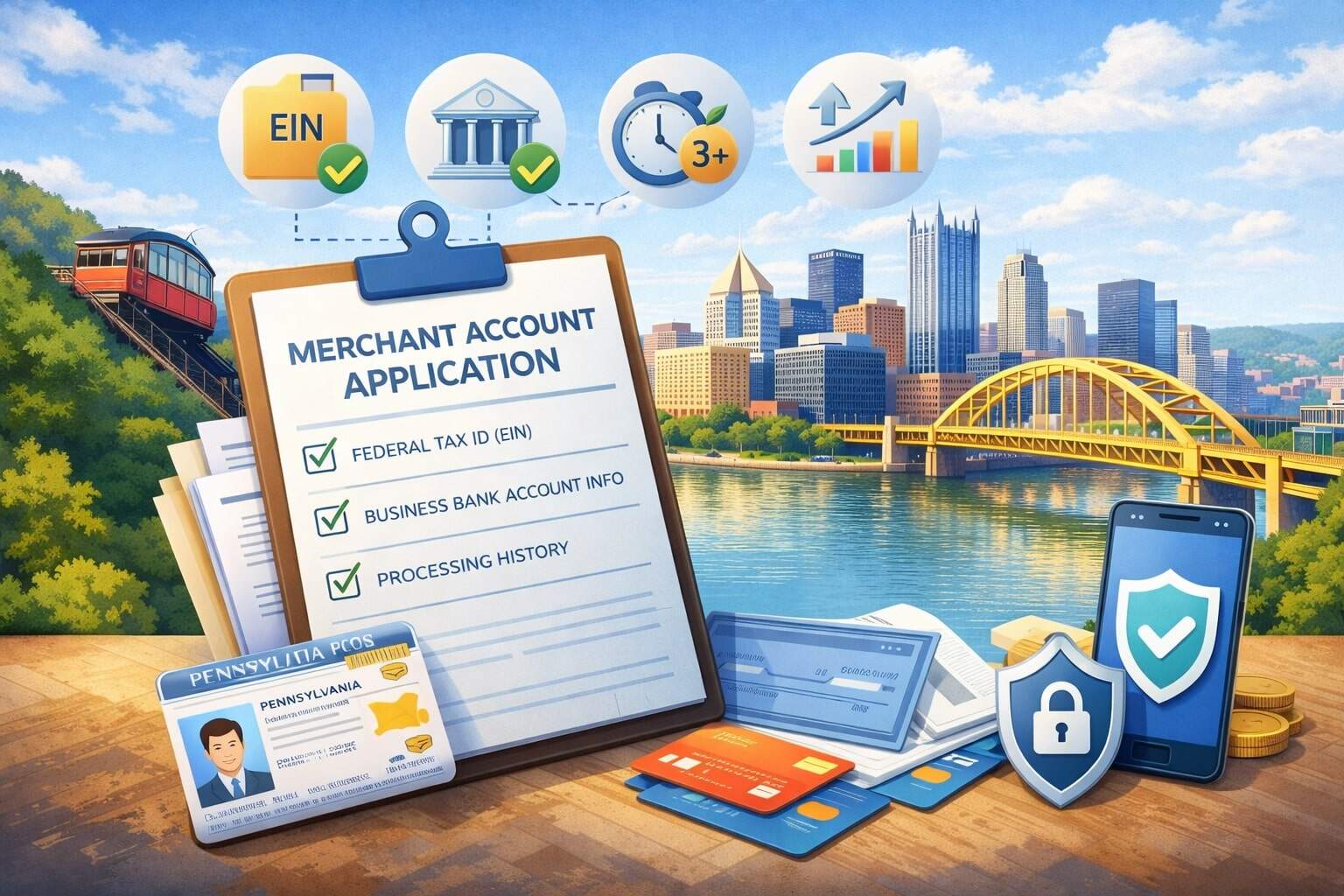
This guide explains the merchant account approval requirements for Pennsylvania businesses in plain language, with a practical Pennsylvania-first checklist and Pittsburgh-specific tips.
If you’re launching a new storefront in Pittsburgh, moving online, or switching processors, the fastest approvals usually happen when you prepare the same evidence underwriters look for: clean business registration, clear ownership, consistent banking, transparent pricing and refund terms, and a low-risk processing plan.
What a “Merchant Account” Approval Really Means in Pennsylvania
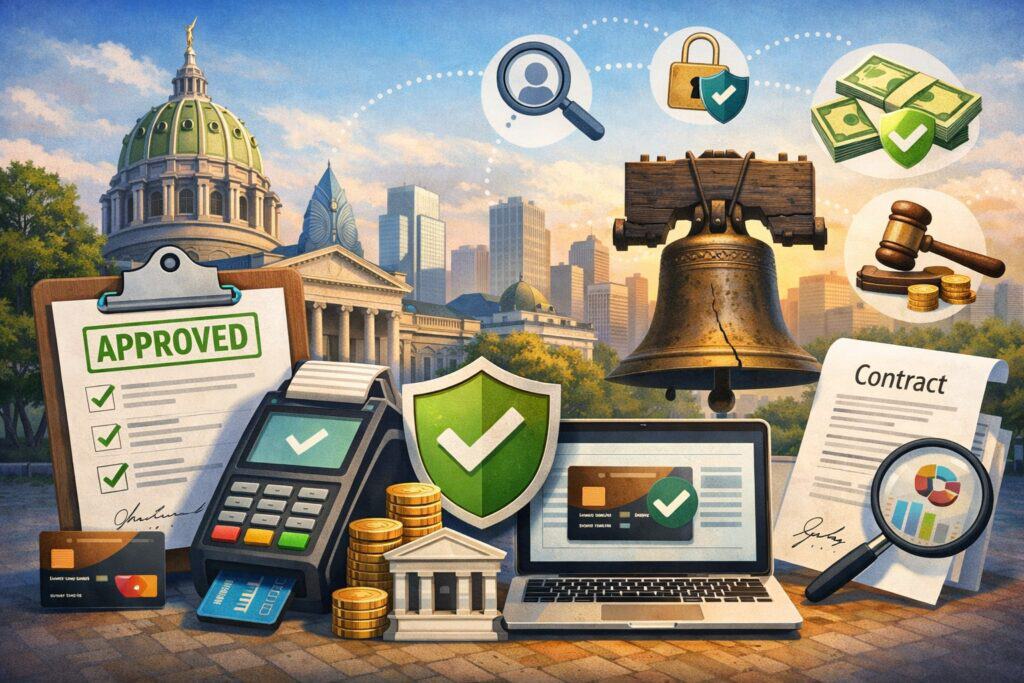
A merchant account is the behind-the-scenes arrangement that allows your business to accept card payments and settle funds into your bank account. Approval is not automatic because card payments carry risk: fraud, chargebacks, and regulatory exposure.
Underwriters are trained to verify that your business is real, your owners are identifiable, and your operations match what you’re asking to process.
For merchant account approval requirements for Pennsylvania businesses, most decisions come down to three buckets. First is identity and legitimacy: is the business properly formed, registered, and operating transparently?
Second is financial and operational stability: can the business deliver what it sells, refund fairly, and survive normal chargeback cycles? Third is risk alignment: does your business model match your requested monthly volume, ticket size, and sales channels (retail, online, phone, invoicing)?
Pennsylvania businesses often run into avoidable delays when applications include mismatched addresses, unclear product descriptions, missing state tax registration (when relevant), or websites without policies.
Approvals speed up dramatically when the application, bank records, storefront/website, and public filings all tell the same story.
Pennsylvania Business Legitimacy Requirements Underwriters Commonly Verify

One of the most important merchant account approval requirements for Pennsylvania businesses is proving the business exists as a legitimate entity and is properly set up to operate.
Underwriters typically cross-check your business name, address, and entity type against state-level records and your supporting documents.
If you’ve formed an LLC or corporation, underwriters may ask for formation documents (like Articles of Organization/Incorporation) and sometimes a certificate of good standing/subsistence to confirm the entity is active and in good standing.
Pennsylvania’s Department of State explains that a certificate of subsistence (good standing) confirms the entity is still in existence on the state’s record. If you sell taxable goods (many retail and ecommerce businesses do), processors often expect you to be registered appropriately for state taxes.
Pennsylvania’s Business One-Stop Shop and the Department of Revenue point businesses to state registration workflows for tax accounts, including sales and use tax licensing via myPATH.
Core Documents Needed for Merchant Account Approval
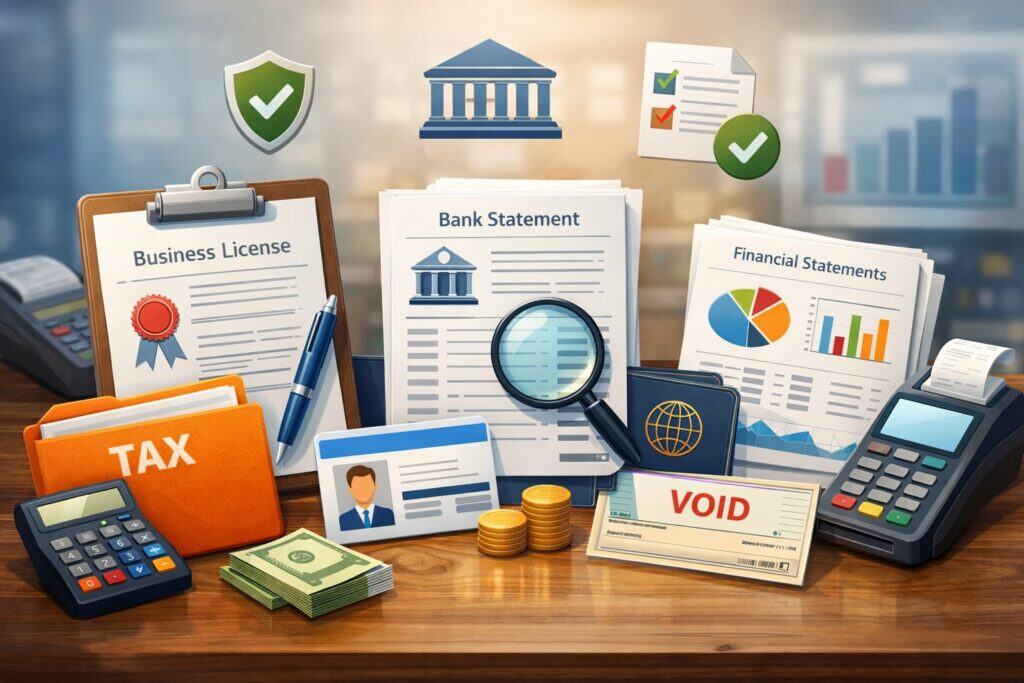
Most providers ask for a “standard document pack.” If you prepare it upfront, you’ll meet the merchant account approval requirements for Pennsylvania businesses faster and avoid multiple back-and-forth requests.
Commonly requested items include: government-issued ID for owners, basic corporate documents, a voided check or bank letter for the settlement account, and recent business bank statements.
Many underwriting guides also request prior processing statements if you’ve accepted cards before, because it shows your actual volume and chargeback history.
For newer Pennsylvania businesses, it’s normal to have limited history. Underwriters may rely more heavily on what you can show: proof of business address (lease or utility bill), vendor/supplier invoices, marketing materials, and a clear explanation of how you will fulfill orders.
If you’re ecommerce or mail/phone order (MOTO), the website review becomes part of the “document pack” because the site is treated as proof of your customer experience and policies.
If you want the shortest approval timeline, keep your pack clean: readable scans, matching names/addresses, and bank statements that clearly show the business account holder and operating activity.
Banking and Funding Requirements: Settlement Account Rules That Matter
Your settlement account is where card deposits land, and it’s a major checkpoint in merchant account approval requirements for Pennsylvania businesses. Underwriters look for a legitimate, stable bank relationship because it reduces the chance of “hit-and-run” fraud.
Expect scrutiny on three areas: account ownership, account type, and cashflow. The settlement account should generally be a business checking account in the same legal name as the applicant (or a clearly documented DBA relationship).
Many processors will reject starter checks, deposit slips, or ambiguous banking proof and instead require a voided check, a bank letter, or electronic verification.
Bank statements are used to confirm the business address, owner ties, and day-to-day operations. If your statements show frequent overdrafts, large unexplained cash withdrawals, or unusual spikes, underwriting may ask for clarifications, reserves, or lower initial limits.
For higher requested volumes, it’s also common to be asked for financials (profit & loss, balance sheet) or tax returns—especially if you’re asking for larger monthly processing caps.
For Pittsburgh-area businesses with seasonal swings (events, tourism, sports weekends), it helps to proactively explain seasonality. Underwriters are more comfortable approving growth when your explanation is consistent and documented.
Sales Tax, State Registrations, and “Compliance Proof” in Pennsylvania
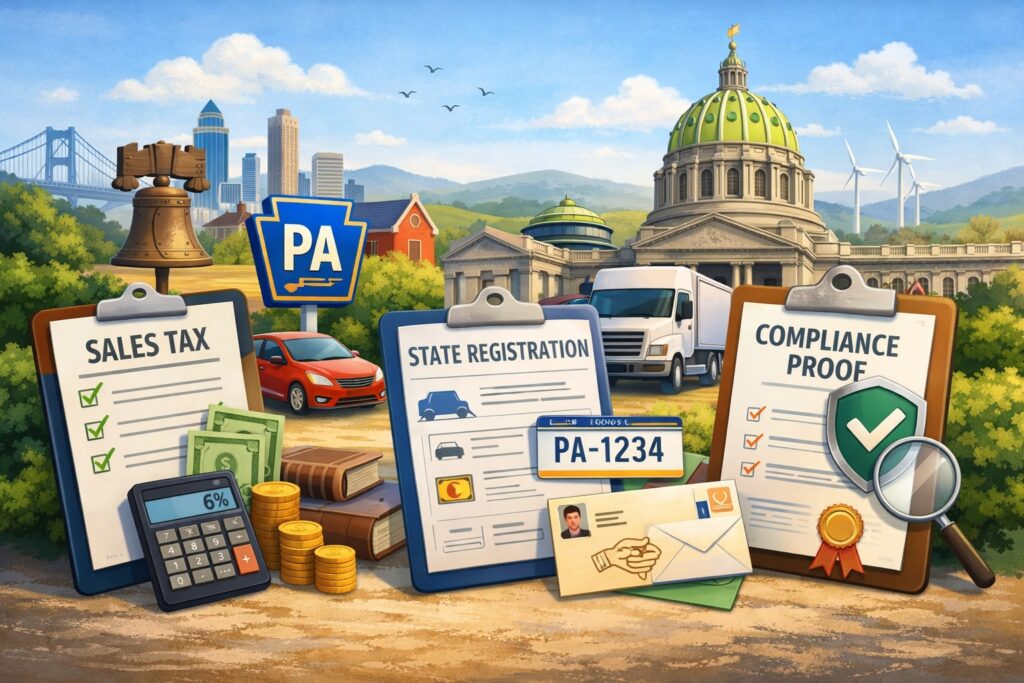
While a processor is not the tax police, missing or inconsistent state setup is a frequent reason for delays in merchant account approval requirements for Pennsylvania businesses—especially for retail and ecommerce.
Pennsylvania provides structured guidance for starting and registering a business for state tax obligations, including sales and use tax licensing through myPATH. For many merchants, having the right license (when required for your activity) is part of proving you’re operating legitimately.
Processors don’t always demand a sales tax license document, but they often ask for a business license “if applicable,” and they may cross-check whether your business looks like a retailer that should be collecting tax.
If you operate pop-ups, markets, or event-based selling, your business activity should be clearly described so underwriters don’t misinterpret your model. Pennsylvania also distinguishes between certain sales tax licensing roles (like retail vs wholesaler), which matters if your business purchases inventory for resale.
Website and Online Store Requirements: What Underwriters Review Line-by-Line
If you sell online, your website is effectively part of the underwriting file. For merchant account approval requirements for Pennsylvania businesses, processors commonly review whether customers can understand what you sell, what it costs, and how disputes are handled.
Underwriters typically expect your website to include: clear product descriptions, pricing, contact methods, shipping/fulfillment timelines, return/refund policy, privacy policy, and terms and conditions. Many underwriting requirement sheets explicitly list these website elements as approval factors for ecommerce and MOTO businesses.
The approval logic is simple: unclear sites lead to chargebacks. A missing refund policy, vague shipping estimates, or a hard-to-find phone number increases dispute risk.
In a city like Pittsburgh where many businesses expand from local to online (restaurants adding merch, boutiques adding shipping), the online experience must match your real capabilities. If you ship in 2–3 days locally but 7–10 days nationwide, say so. If you offer custom items, explain production timelines prominently.
Another key underwriting trigger is marketing claims. If your site makes aggressive promises (instant results, “guaranteed” outcomes, medical-like claims), approval becomes harder because claims-based disputes are common. Keep your site accurate, specific, and consistent with your application.
Industry Risk, MCC Codes, and Why Some Pennsylvania Businesses Get Extra Scrutiny
Not all industries are treated equally. One of the most misunderstood merchant account approval requirements for Pennsylvania businesses is that your “risk profile” can change everything: pricing, reserves, processing limits, and approval speed.
Underwriters classify businesses using a Merchant Category Code (MCC). Your MCC influences how banks and card networks expect your chargeback rates and fraud risk to behave.
Ecommerce generally gets more scrutiny than card-present retail because card-not-present fraud is higher. Subscription billing, travel, ticketing, digital goods, and “future delivery” models get more scrutiny because customers can dispute before they receive value.
High-risk categories often require additional documentation, stricter website disclosures, and sometimes rolling reserves. Underwriting checklists for certain verticals show added requirements like longer processing history, tighter chargeback thresholds, and additional affidavits for regulated products.
If you’re in a higher-scrutiny category in Pennsylvania, you can still get approved. The path is usually: (1) be transparent about what you sell, (2) show fulfillment capability, and (3) demonstrate dispute prevention (clear descriptors, fast support response, clean refund process).
PCI DSS 4.0 and Security Requirements Merchants Must Meet
Security compliance is not optional, and it’s a core part of merchant account approval requirements for Pennsylvania businesses—especially if you store, process, or transmit cardholder data in any way.
PCI DSS 4.0 became the active standard after PCI DSS 3.2.1 retired, with “future-dated” requirements becoming mandatory after March 31, 2025.
In practice, most Pennsylvania merchants meet PCI expectations by using PCI-compliant payment gateways, EMV terminals, point-to-point encryption (when available), and avoiding storage of sensitive card data.
Underwriters may not ask for a PCI certificate at application, but processors typically require PCI validation after approval (and may charge fees or apply restrictions for non-compliance).
The operational reality: if you use modern hosted checkout pages, tokenization, and reputable POS systems, PCI scope is reduced. If you key-enter cards, store them, or run custom integrations, your obligations rise.
For Pittsburgh businesses with multiple locations or seasonal staffing, PCI compliance is also a training issue. Limit who can access admin panels, enforce strong passwords and MFA where possible, and keep devices updated.
PCI is increasingly moving toward continuous security posture rather than annual paperwork, and underwriting is aligning to that reality.
KYC, OFAC, and “Know Your Business” Checks That Can Delay Approval
Processors run identity and risk checks similar to bank onboarding. These controls are baked into merchant account approval requirements for Pennsylvania businesses because banks must manage fraud, money laundering risk, and sanctions exposure.
A major piece is OFAC/sanctions risk. The Office of Foreign Assets Control (OFAC) states that transactions by a United States financial institution are subject to OFAC regulations, and financial institutions build screening and controls accordingly.
That means you may be asked for ownership details, IDs, and sometimes verification steps that feel “extra,” especially for new small businesses.
Another frequently misunderstood point is beneficial ownership reporting rules. If you’ve heard about BOI reporting under the Corporate Transparency Act, note that Treasury/FinCEN issued an interim final rule removing BOI reporting requirements for U.S. companies and U.S. persons, narrowing it to foreign reporting companies.
Even with that change, processors still collect ownership info for underwriting—because underwriting is about risk controls, not just government filings.
To avoid delays, ensure owners’ IDs are clear, names match exactly (including middle initials if used), and addresses are consistent across documents. Inconsistent identity data is one of the fastest ways to get stuck in “pending review.”
Chargeback and Fraud Thresholds: The Hidden Approval Requirement
If you want a merchant account that stays open, you must treat disputes as part of the merchant account approval requirements for Pennsylvania businesses—not something you deal with later. Underwriters care about chargebacks because excessive dispute rates can lead to monitoring programs, fines, or termination.
Even at onboarding, underwriters estimate your likely chargeback risk from your business model and policies. Ecommerce with long shipping times or unclear refunds raises risk. So do free trials that roll into paid subscriptions, unclear billing descriptors, and hard-to-reach support.
To strengthen approval odds, build a dispute-resistant customer experience: display a real customer service phone number and email, respond quickly, ship on time, and issue refunds before disputes escalate.
Make your billing descriptor recognizable (store name, URL, or location), and avoid descriptors that confuse buyers.
For Pittsburgh service businesses (home services, repairs, event vendors), disputes often come from misunderstandings rather than fraud. Written estimates, clear cancellation terms, and invoice documentation can dramatically reduce chargebacks—and make underwriters more comfortable approving higher limits.
Pittsburgh-Specific Approval Tips for Local Merchants
Pittsburgh has a strong mix of neighborhood retail, universities, healthcare-adjacent services, sports-driven spikes, and seasonal event commerce. That uniqueness affects merchant account approval requirements for Pennsylvania businesses because underwriters look at “processing patterns,” not just paperwork.
If you’re in a Pittsburgh neighborhood business district (boutiques, cafes, salons), card-present approvals are typically smoother when you use EMV terminals and have consistent pricing.
If you’re near major venues and expect large weekend spikes, explain why your volume fluctuates (game days, festivals, conferences). Sudden spikes without explanation are a common risk trigger.
If you do pop-ups, farmers markets, or multi-location events across Allegheny County, be very clear about your sales channels: are you swiping/chipping cards, taking tap-to-pay, sending invoices, or accepting online preorders? Underwriters approve faster when they can map your channels to a coherent risk profile.
Also, keep your public footprint consistent. Make sure your business address appears the same on your website, invoices, and registrations. If you use a coworking address in Pittsburgh, disclose it and provide a lease/utility or proof of occupancy if requested.
Step-by-Step Checklist to Meet Merchant Account Approval Requirements (Fast Track)
This checklist is designed to meet merchant account approval requirements for Pennsylvania businesses without guesswork. Each step reduces underwriting friction and increases approval speed.
Start by ensuring your legal business identity is stable: correct legal name, DBA (if used), consistent address, and formation documents ready. If you need proof of good standing, Pennsylvania offers certificates of subsistence through the Department of State.
Next, confirm your bank account is a business checking account aligned to the applicant name, with a voided check or bank letter available.
Then prepare 60–90 days of business bank statements and (if applicable) your last 1–3 months of processing statements to show actual performance. Underwriting requirement lists commonly call for these items.
If you’re new, replace missing history with contracts, invoices, supplier proof, and a short operational overview.
Finally, align your customer-facing policies: clear refunds, shipping/fulfillment, contact info, and terms. If you sell online, treat your website as part of compliance. If you process higher volumes, be ready with financials and an explanation for seasonality or growth.
This is the fastest path because it gives underwriters what they need to say “yes” confidently.
Future Predictions: How Pennsylvania Merchant Approvals Are Likely to Change
The merchant account approval requirements for Pennsylvania businesses are gradually shifting from paperwork-heavy onboarding to continuous risk monitoring. That means approvals may become faster, but ongoing compliance expectations will rise.
First, expect more real-time verification: instant bank verification, automated KYB checks, and continuous monitoring of fraud signals. Underwriting requirement documents already reference stronger verification and structured evidence for online and high-risk categories, and that trend is moving “downmarket” to smaller businesses.
Second, PCI and security expectations will keep tightening. PCI DSS 4.0’s full mandatory requirements (after March 31, 2025) reflect a broader shift toward ongoing security practices rather than annual checklists.
Merchants using modern tokenization and hosted payment fields will have an advantage because they can reduce their PCI scope.
Third, underwriting will increasingly focus on customer experience metrics that correlate with disputes: shipping reliability, cancellation friction, and support response time. In practice, that means your policies and your operational execution will matter as much as your documents.
For Pittsburgh merchants expanding online, this favors businesses that can prove predictable fulfillment and transparent terms—because those are the merchants who keep chargebacks low.
FAQs
Q.1: What are the merchant account approval requirements for Pennsylvania businesses in 2026?
Answer: In 2026, the merchant account approval requirements for Pennsylvania businesses generally include: a verified legal business identity, owner identity checks, a matching business bank account for settlement, supporting financial documents (often bank statements), and clear customer policies that reduce fraud and chargebacks.
Online businesses also need a website that clearly explains products, pricing, fulfillment timelines, and refunds, because underwriting treats your website as proof of customer experience.
In many cases, Pennsylvania registrations (like business formation proof and, when applicable, state tax registration) help demonstrate legitimacy. Pennsylvania’s official resources emphasize registering for applicable state tax accounts through myPATH as part of business setup.
Q.2: Do I need a Pennsylvania certificate of good standing to get approved?
Answer: Not always, but it can help—especially for larger limits, higher-risk categories, or when public records are unclear. Pennsylvania’s Department of State explains that a certificate of subsistence (good standing) confirms the entity is still in existence on the state’s record.
If underwriting flags inconsistencies, providing a good standing certificate can quickly resolve doubts and reduce back-and-forth.
Q.3: Why do processors ask for bank statements and a voided check?
Answer: This is a core part of merchant account approval requirements for Pennsylvania businesses. Bank statements help verify the business is operating, confirm the address and account ownership, and reveal cashflow stability.
A voided check (or bank letter) confirms the routing/account details for deposits and reduces fraud risk. Many underwriting checklists explicitly list recent bank statements plus a voided check or bank verification as standard requirements.
Q.4: What website pages do Pennsylvania ecommerce merchants need for approval?
Answer: Most underwriters look for clear contact information, refund/return policy, shipping and delivery terms, privacy policy, and terms and conditions. They also expect product descriptions and pricing to be transparent.
Underwriting requirement sheets for internet merchants often list these website elements as expected components before approval. These items matter because unclear policies are strongly correlated with chargebacks.
Q.5: Is PCI compliance required before approval?
Answer: It depends on the provider, but PCI obligations apply once you accept cards. PCI DSS 4.0 is now the industry standard, with all version 4.0 requirements mandatory after March 31, 2025.
Many processors approve first and then require PCI validation, but merchants with safer setups (tokenized gateways, hosted checkout, EMV terminals) usually have smoother onboarding and fewer compliance issues later.
Q.6: I heard BOI reporting rules changed—does it affect merchant account approval?
Answer: BOI reporting rules and underwriting are different things. Treasury/FinCEN issued an interim final rule removing BOI reporting requirements for U.S. companies and U.S. persons, narrowing it to foreign reporting companies.
However, processors may still collect beneficial ownership and ID information because banks must control fraud and financial crime risk. So even if your BOI filing obligation is removed, underwriting still wants ownership clarity.
Conclusion
The fastest way to meet merchant account approval requirements for Pennsylvania businesses is to think like an underwriter: prove legitimacy, reduce ambiguity, and show you can deliver a low-dispute customer experience. Keep your business identity consistent across filings, banking, and marketing.
Prepare a clean document pack (IDs, formation docs, bank proof, bank statements, and processing history if you have it). If you’re online, treat your website like a compliance document—clear policies, clear contact info, and honest fulfillment timelines.
For Pittsburgh merchants, be proactive about explaining seasonality, event spikes, and multi-channel selling. Underwriters don’t fear growth—they fear surprises.
When your story is consistent and your operations are dispute-resistant, approvals are smoother, limits are higher, and you’re far less likely to face holds, reserves, or account termination later.