The future of payment security in the United States is being shaped by a powerful mix of tokenization, biometrics, passwordless authentication, artificial intelligence, and evolving compliance rules.
Payment security is no longer just about locking down card data at rest. It now demands layered defenses that guard every step of the customer journey, from the first click or tap to settlement and dispute resolution.
This article explains how tokenization reduces exposure, how biometrics and passkeys eliminate weak passwords, how instant payment rails change fraud dynamics, and why cryptography and compliance are entering a new era.
You’ll get a practical, U.S.-focused guide to architectures, controls, and readiness steps that merchants, SaaS platforms, ISVs, marketplaces, and payment facilitators can use now to lower fraud and chargebacks while boosting approval rates and customer trust.
Throughout, we’ll highlight the latest standards, industry data, and regulatory developments so your payment security strategy stays current, resilient, and scalable for growth.
Why Payment Security is Changing So Fast in the U.S.
Payment security is changing because the attack surface keeps expanding. Consumers now pay with cards on file, mobile wallets, BNPL accounts, and account-to-account transfers. Merchants run on cloud apps, APIs, and microservices, while issuers and acquirers tune real-time risk engines.
This complexity gives fraudsters more entry points. Simultaneously, U.S. standards and regulators are pushing for stronger controls: PCI DSS v4.0 formally replaced 3.2.1 on March 31, 2024, and future-dated requirements land March 31, 2025.
That means new expectations around risk-based authentication, stronger MFA management, and more rigorous change control, testing, and scoping. For many organizations, PCI 4.0 is a forcing function to modernize payment data flows and shrink the cardholder data environment (CDE) with tokenization and proxy patterns.
There’s another catalyst: instant payments. The FedNow® Service and RTP® are accelerating money movement, shrinking windows to detect and stop fraud.
The Federal Reserve is adding new risk tools and raising FedNow’s transaction limit to $1 million, which changes the payoff math for criminals and heightens the need for velocity controls, device reputation, and configurable thresholds.
Real-time rails also demand faster, more accurate identity assurance and transaction scoring at the edge. Meanwhile, FIDO passkeys are gaining mainstream adoption across major platforms, reducing phishing and credential stuffing that often drive payment fraud upstream.
Together, these pressures make a future-proof, layered security architecture a business necessity rather than an option.
Tokenization: the foundation of modern payment security
Tokenization replaces sensitive primary account numbers (PANs) or bank details with non-sensitive tokens. When designed well, tokenization drastically reduces data breach blast radius, simplifies PCI scope, and improves authorization performance by letting you store and reuse credentials safely.
U.S. merchants typically combine three types of tokens: network tokens that card networks provision, merchant or gateway tokens that reference vaulted PANs, and device tokens bound to hardware-secure elements in mobile wallets.
Proper token lifecycle management covers provisioning, activation, aging, detokenization controls, and revocation. It also demands detailed access control, key management, and monitoring for suspicious token creation or usage patterns.
Pair tokenization with card-on-file updater services, Card Security Code (CSC) policies, and 3DS to balance friction and approvals. Finally, align your token architecture with PCI DSS v4.0’s scoping guidance and secure software lifecycle requirements, so your vault and token APIs withstand audits and real-world attacks.
Network tokens: fraud reduction and lifecycle benefits
Network tokens—provisioned by card networks and mapped to a PAN—can lower fraud and improve approval rates because they stay fresh as card details change.
Visa’s recent threat reporting shows meaningful improvements around token provisioning risk when controls are tuned; specifically, provisioning fraud in the first seven days after token activation dropped 29% globally in 2024 versus the prior year.
That trend underscores the value of age-based controls, device binding, and issuer intelligence in the first week of token life, when risk is highest. For U.S. merchants, network tokens also help continuity: if a consumer’s physical card is reissued, the token can continue working, reducing churn and involuntary declines.
Build your implementation with rigorous device and domain controls, evaluate token age and usage anomalies, and coordinate with your gateway and acquirer to ensure tokens are correctly recognized in authorization flows and in dispute processing.
Device and mobile wallet tokens: secure elements and risk signals
Mobile wallets such as Apple Pay and Google Pay rely on device-bound tokens stored in a secure element or trusted execution environment. These tokens never expose the PAN to the merchant, and authentication uses on-device biometrics like Face ID or fingerprint.
The merchant gains cryptographic proof and dynamic security codes per transaction, significantly tightening card-present and card-not-present defense. To maximize benefits, ensure your terminal or SDK fully validates payment cryptograms, and pass through device and wallet metadata to your risk system.
When combined with network tokens for card-on-file, you get a consistent, token-first strategy across channels. Maintain fallback paths for customers without wallets, but prioritize low-friction biometric flows where possible to drive both conversion and security.
(For 3DS and SRC online, align wallet experiences with streamlined, consistent checkout patterns to maintain trust.)
Merchant tokens and vault design: scoping, keys, and audits
Many merchants and platforms still need their own tokens for internal references and multi-PSP routing. If you operate a token vault, use hardware security modules (HSMs) for key protection, split-knowledge and dual-control for key operations, and robust audit trails.
Limit detokenization to the narrowest possible set of microservices, and isolate vault networks from the rest of your stack. Map these controls to PCI DSS v4.0 requirements for cryptographic storage, change management, and access governance, and plan for your future-dated items due March 31, 2025.
If you don’t need to hold PANs, offload vaulted PAN storage to a PCI-certified provider and use their tokens across your ecosystem to compress scope. Either way, test tokenization and detokenization paths as part of chaos engineering and red team exercises, validating that compromised application credentials cannot extract raw PANs.
Biometrics and Passwordless Authentication: FIDO2 and passkeys

Passwordless sign-in with FIDO2/WebAuthn passkeys is quickly becoming the default for high-risk customer flows, including checkout, account changes, and high-value ACH or instant payments.
Passkeys bind a private key to a user’s device and a public key to your service, eliminating shared secrets that can be phished or stuffed.
Adoption surged in 2024–2025: the FIDO Alliance reports that more than 15 billion online accounts can now leverage passkeys, and platform support spans Apple, Google, Microsoft, and leading password managers.
Microsoft is even phasing out password storage in Authenticator by August 2025, signaling an industry pivot toward passkey-first experiences. For payment security, passkeys reduce account takeover (ATO), thereby lowering downstream payment fraud and chargebacks.
Design flows to encourage biometric unlocks for high-risk actions, provide recovery paths with multi-device credentials and hardware keys, and log attestation metadata to tune risk decisions.
Adoption momentum and UX patterns you can use now
A practical way to deploy passkeys is to start with login and step-up authentication for checkout or payout. The latest industry snapshots show passkey usage expanding across e-commerce leaders, and user awareness rising sharply.
Translate that momentum into clear UI copy: “Use a passkey” with a short explainer that it’s faster and more secure than passwords. Offer account linking with device prompts, and support cross-platform syncing via platform credential managers and password manager vaults that now support passkey migration.
The FIDO community has published draft specifications for moving credentials between providers, which will make account recovery and provider switching easier for consumers. That portability improves adoption and minimizes lock-in anxiety—a key conversion lever.
Measure impact on ATO rates, challenge rates, and successful login completion to quantify value for your security and growth teams.
Behavioral biometrics and continuous authentication
While passkeys validate identity at sign-in or step-up, behavioral biometrics help during the session. Keystroke cadence, pointer movements, mobile sensor data, and navigation patterns can feed a risk engine that continuously scores whether the current user still “looks like” the account owner.
For payments, use behavioral signals to trigger silent 3DS data enrichment, limit credential changes, or pause risky payouts for manual review. Combine behavioral analytics with device intelligence (jailbreak/root checks, emulator flags), IP reputation, and merchant-defined velocity rules.
When you design these controls, document privacy safeguards, minimize data retention, and provide clear customer notices. Tie controls back to PCI DSS v4.0’s requirement for targeted risk analyses and authentication policy governance, so your continuous authentication program is auditable and rights-respecting.
Real-time Payments: FedNow, Risk Thresholds, and Instant Fraud Response
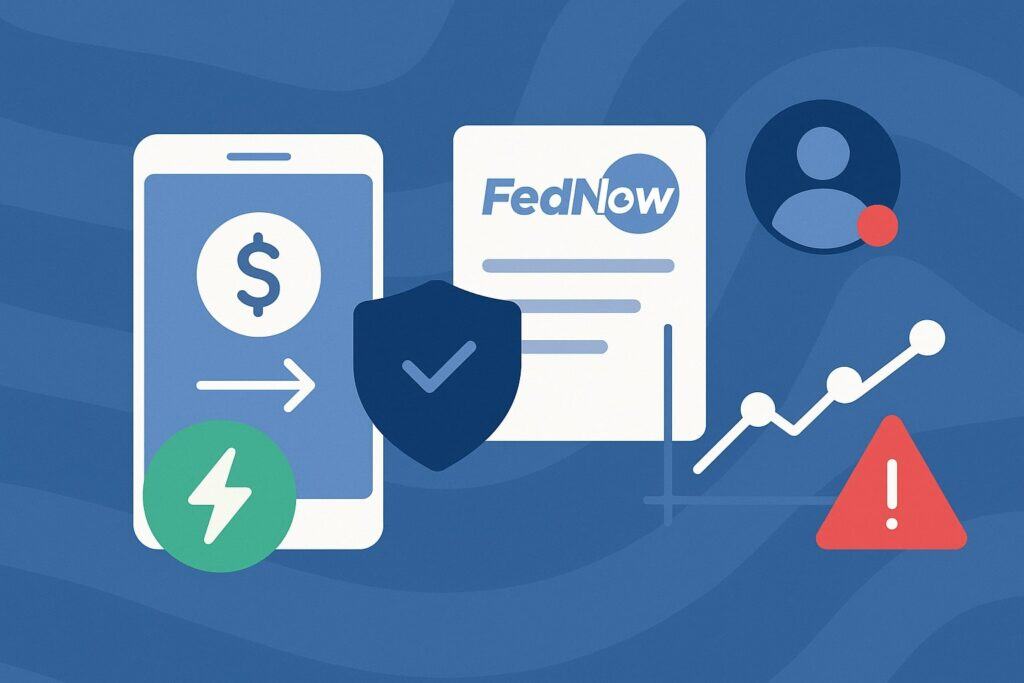
Instant payments compress fraud detection windows. With FedNow, funds can move and be available in seconds, which means pre-transaction risk checks carry more weight than post-transaction remediation.
The Federal Reserve is rolling out new risk management capabilities, including account activity thresholds and a transaction limit increase to $1 million. Financial institutions can configure value and velocity controls by customer segment, enabling more granular risk policies.
Your security model should add real-time device checks, customer-specific limits, payee reputation, and behavioral signals before releasing funds.
For disputes, educate customers and staff on the differences between card chargebacks and instant credit transfers, and configure fraud reporting and callbacks with your bank partners.
Build runbooks for account takeover escalation, mule account detection, and synthetic identity cases, and verify that your SLA for alert reviews matches the speed of the rail.
Practical controls for U.S. merchants and FIs adopting FedNow
Start with low-risk use cases and scale up, as Federal Reserve guidance and industry best practices recommend. Set conservative per-transaction and daily limits, and require passkey or on-device biometrics for new payees or first-time high-value sends.
Use account age, token age, and relationship depth as policy features; newer accounts and newly provisioned tokens deserve stricter limits. Align internal monitoring with FedNow’s operating procedures, especially around message timeouts and reject windows, so your automation and manual reviews can act in time.
Maintain a knowledge base for frontline staff that explains instant payment fraud patterns (e.g., impersonation, investment scams) and the limited recourse compared to card rails.
Finally, monitor Federal Reserve updates and resources that summarize fraud mitigation capabilities and readiness guidance, and integrate those controls into your payment orchestration layer.
Smarter authentication at checkout: 3DS 2.x and Click to Pay (SRC)
For card-not-present flows, EMV® 3-D Secure 2.x (3DS) and EMV® Secure Remote Commerce (SRC) “Click to Pay” aim to improve security and consistency. EMVCo has published customer experience guidelines to streamline 3DS and SRC handling, reducing friction and abandoned carts.
Use data-rich 3DS requests to improve issuer risk scoring and approvals; when low risk, most authentications remain frictionless. Pair 3DS with network tokens and vault tokens to protect cards on file, and prefer SRC for a consistent “Pay” button that removes merchant-specific vaulting from the browser context.
Coordinate acquirers and gateways so liability shifts, exemption handling, and retry logic are consistent. Monitor EMVCo specification updates and bulletins to stay compatible with issuers’ latest authentication behaviors and data fields, which can materially impact authorization rates and fraud outcomes.
Cryptography’s next chapter: preparing for post-quantum
The cryptography landscape is entering a long transition to post-quantum algorithms. In August 2024, NIST approved three FIPS standards for post-quantum cryptography (PQC): FIPS 203 (ML-KEM, based on CRYSTALS-Kyber), FIPS 204 (ML-DSA, based on CRYSTALS-Dilithium), and FIPS 205 (SLH-DSA, based on SPHINCS+).
While near-term payments will continue using current public-key systems, U.S. organizations should begin crypto-agility planning now. Inventory where asymmetric crypto appears in your payment stack—TLS termination, HSMs, code signing, device attestation, and token vault backups.
Choose libraries and vendors that support hybrid modes and key rotation strategies. Document how you’ll phase in PQC for internal services first, then customer-facing properties, and test performance impacts. Keep keys small, control algorithm sprawl, and track NIST updates as guidance evolves from “adopt” to “enforce.”
Early planning reduces migration risk and helps avoid brittle, last-minute changes when PQC becomes mandatory in regulated sectors.
Data encryption and key management best practices
Beyond PQC readiness, strengthen today’s crypto: enforce TLS 1.2+ with modern cipher suites, rotate certificates automatically, and centralize key custody in FIPS-validated HSMs. Use envelope encryption for vault backups and logs that might contain sensitive metadata.
Restrict decryption to dedicated microservices and short-lived tokens, and alert on decryption at unusual times or from unexpected service accounts. Align crypto controls with PCI DSS v4.0’s requirements for key management, cryptographic storage, and testing.
Finally, simulate key compromise scenarios to practice revocation, re-issuance, and tenant-by-tenant detokenization lockdowns, so your team can respond decisively under pressure.
AI-driven fraud detection and authorization intelligence
Modern payment security leans heavily on machine learning to detect anomalies, score transactions, and optimize approvals. Issuers and networks now analyze signals like merchant category, token age, device reputation, and historical spend to decide in milliseconds.
In 2024, Visa announced new products within its Protect suite—Deep Authorization, enhanced Visa Secure intelligence, and Provisioning Intelligence—to reduce fraud across CNP, A2A, and even non-Visa transactions.
Merchants can complement issuer intelligence with their own behavioral models and rule engines, and they should share high-quality data in authorization requests to improve issuer decisions.
Measure not just fraud reduction, but net revenue impact: approvals gained, false positives reduced, and dispute rates over time.
Feed post-dispute data back into your models to close the loop. AI is not a silver bullet; it works best in a layered control strategy with strong authentication, tokenization, and real-time limits.
The compliance landscape: PCI DSS v4.0, AML/CFT modernization, and audits
Compliance is evolving alongside technology. PCI DSS v4.0 became the active standard on March 31, 2024, retiring v3.2.1, and future-dated requirements become enforceable March 31, 2025.
Expect deeper scrutiny of your risk-based authentication policies, password and MFA administration, monitoring, and change control. Meanwhile, U.S. AML/CFT rules are being modernized.
FinCEN has proposed updates to strengthen risk-based AML programs for financial institutions, and issued a 2024 rule bringing certain investment advisers under BSA obligations such as SAR filing and AML program standards—though Treasury later announced intentions to postpone the effective date and revisit scope.
Payment teams should coordinate with compliance, legal, and BSA/AML officers to ensure fraud defenses, identity assurance, sanctions screening, and monitoring align with evolving obligations.
Keep board-level dashboards for PCI 4.0 readiness, instant payments risk, and KYC/AML changes to demonstrate governance.
Implementation roadmap: how U.S. businesses can act now
Start with a current-state map of your payment data flows: where PANs or account numbers enter, where they persist, and where they’re transformed. Replace raw PAN storage with provider tokens wherever possible, and upgrade to network tokens for cards on file.
Add passkeys to your sign-in and step-up journeys, especially for checkout, new payees, and high-value payouts. For instant payments, configure account-level and customer-segment thresholds, plus device checks and payee reputation.
Align with EMVCo’s latest guidance to simplify customer experience around 3DS and Click to Pay, and share richer data with issuers for better approvals. On crypto, plan for PQC by selecting vendors with hybrid and migration paths.
Strengthen key management and rotate secrets relentlessly. Finally, operationalize PCI 4.0 by mapping each requirement to owners, evidence, and controls, with a special focus on future-dated items due March 31, 2025. Track FedNow updates and FinCEN rulemaking so legal, compliance, and engineering stay in sync.
FAQs
Q.1: What’s the difference between network tokens and gateway/merchant tokens?
Answer: Network tokens are provisioned by card networks and replace the PAN across issuers and merchants. They update automatically when a card is reissued and often improve approval rates and fraud outcomes. Merchant or gateway tokens reference a PAN in a specific vault and are great for internal references, routing, and multi-processor setups.
Many U.S. merchants use both: network tokens for card-on-file and merchant tokens for internal orchestration, minimizing raw PAN exposure under PCI DSS v4.0. Recent reporting indicates that well-managed token provisioning lowers early-life fraud, reinforcing lifecycle controls.
Q.2: Are passkeys really ready for mainstream checkout?
Answer: Yes. Passkey support now spans Apple, Google, Microsoft, and leading password managers, and more than 15 billion accounts can use them. Microsoft is phasing out password storage in its Authenticator app by August 2025, underlining the shift to passwordless.
For checkout, deploy passkeys for account login and step-up authentication on sensitive actions like adding a new card or initiating a high-value ACH or instant payment. Expect lower phishing and ATO, higher successful logins, and fewer challenges. Provide backup options—hardware keys and multi-device passkeys—to keep recovery smooth.
Q.3: What changes with instant rails like FedNow for fraud management?
Answer: Instant rails shrink the time to detect and stop fraud, making pre-transaction risk checks crucial. The Federal Reserve is adding risk tools—such as account activity thresholds—and raising the FedNow transaction limit to $1 million, so you should tune value/velocity controls by customer segment.
Add passkey-based step-up for new payees, use device and behavioral signals, and educate customers about scams. Build playbooks for mule detection and ATO, and ensure your alerting and manual reviews operate within FedNow’s operating timeouts.
Q.4: Do I have to migrate to post-quantum cryptography right now?
Answer: Not immediately, but you need a plan. NIST approved FIPS 203/204/205 in 2024, and the industry is moving toward adoption. Begin with crypto-agility: inventory where you use public-key crypto and choose vendors and libraries that support PQC and hybrid modes.
Pilot in internal services, then migrate customer-facing systems. Keep performance, key sizes, and HSM compatibility in mind, and follow NIST guidance as it evolves. Early preparation lowers later migration risk.
Q.5: How does PCI DSS v4.0 affect my roadmap?
Answer: PCI DSS v4.0 became active March 31, 2024, and future-dated requirements arrive March 31, 2025. Priorities include risk-based authentication governance, stronger MFA administration, continuous monitoring, and secure software lifecycle controls.
Tokenization can shrink your CDE, reduce audit scope, and simplify evidence. Build a gap assessment mapped to owners and artifacts, and treat PCI 4.0 as an ongoing program rather than a once-a-year exercise.
Q.6: What about 3DS and Click to Pay—are they worth it?
Answer: Yes, when implemented thoughtfully. EMVCo’s recent guidance focuses on consistent, low-friction customer experiences, which directly impact abandonment and approvals.
Use data-rich 3DS to support frictionless flows, and align Click to Pay (SRC) with your tokenization strategy so customers get familiar, secure checkout across devices. Keep your specs and SDKs current with EMVCo bulletins to avoid edge-case failures.
Q.7: Where does AI best fit in the payment security stack?
Answer: Use AI in three places: identity and ATO detection, transaction risk scoring at authorization time, and post-dispute analytics to improve future decisions.
Pair AI with clear business metrics—net approvals, false positive rate, fraud dollars prevented—and with strong authentication like passkeys. Watch for network and issuer enhancements such as Visa’s Protect suite, and share richer data to get better issuer decisions.
Conclusion
The future of payment security in the U.S. is layered, token-first, and passwordless-ready. Start by minimizing sensitive data with network and merchant tokens, and harden your vault and detokenization paths.
Roll out passkeys to neutralize phishing and ATO, and use behavioral biometrics to catch anomalies during the session. For instant payments, implement strict value and velocity controls, payee reputation, and biometric step-up.
Keep your 3DS and Click to Pay implementations aligned with EMVCo’s customer experience guidance to protect revenue while controlling fraud. Plan now for PQC so crypto changes are graceful, not rushed.
Finally, operationalize PCI DSS v4.0 and monitor AML/CFT modernization to keep your governance current. Taken together, these steps increase approval rates, reduce fraud losses, and deliver faster, safer payments that customers trust—today and as new rails, rules, and threats emerge.